
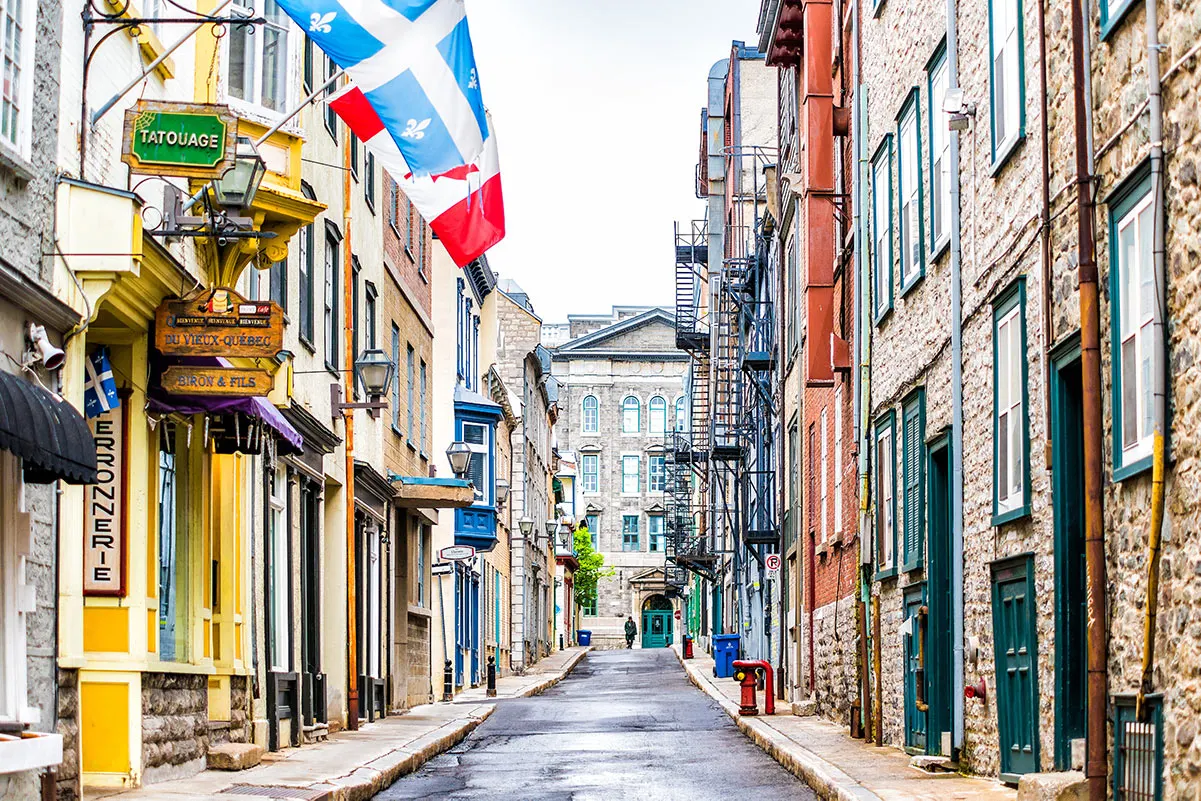
Moving to Quebec: 8 Practical Tips for Newcomers
How to choose the ideal city to live in Quebec?
Well, I imagine you must have already heard of Quebec if you’ve reached this text, so I’ll leave the introductions about the province aside and get straight to the point.
I also imagine that if you have already decided on Quebec as your destination, you should probably be aware of the particularities of migration in this province, so I will not include topics such as culture, immigration legislation or language in this post, as you should already know.
Still, there are always those who need to familiarize themselves a little more with Quebec, even though they have already defined this province as their destination in Canada. For these, I will leave a list of posts that I highly recommend reading:
- 5 major cultural differences between Quebec and other provinces of Canada
- Discover 17 very strange laws in Quebec for newcomers
- Quebec for newly arrived Brazilians: Tips on local culture
Well, if you’ve read everything you can about Quebec, but still haven’t managed to get past the stage where you need to decide which city you’re going to live in, let’s follow the 8 golden tips for those looking for the ideal city to live in Quebec.
1. The cost of living can vary greatly between cities in Quebec
One of the reasons why families may want to live in a region with a lower cost of living is, without a doubt, to save money during the adaptation period in the process of arriving in Canada, something that can take 3 to 5 years depending on the type of immigration project chosen.
It is generally during this period that expatriates are able to achieve sufficient autonomy in their careers and immigration status, moving from temporary residents to permanent residents.
Read also: “What changes for you with permanent residence in Canada“
And why is talking about cost of living so important? Well, immigrating as a quality means being able to enjoy a minimum of leisure and social well-being. But what does this mean in practice? This means that you should be able to have dinner in a reasonable restaurant or go out with your family without thinking about how many reais it would cost in Brazil after your first or second year in Canada.
If you move here and still maintain this habit for a long time, it’s probably because you haven’t established yourself as you should. At least, that’s my personal opinion.
And talking a little about numbers. As an order of magnitude reference: the average cost of living in Canada for a family of 4 was around CA$5,797 per month in 2023, about 1.96 times the world average, and has risen since then. For 2026 values, see How much does it cost to live in Canada in 2026?, where I redo the math with the province’s current minimum wage ($16.60/h) and Montreal’s average rent. There are dozens of rankings that usually point to Canada among the 20 countries with the highest cost of living in the world, mainly due to the cost of housing in relation to the average salary in the country (CA$53 thousand per year). Therefore, cities where this index is lower will always receive more points in your choice in the first years of your life as an immigrant.
2. Don’t confuse “many job offers in Quebec” with many good jobs
Dear readers, the topic of employment always has to come right after the cost of living, as there is no way to afford the much-desired Canadian quality of life without a decent salary to keep your bills up to date. We need to put an end to this fiction created by digital influencers, who still sell Canada as a perfect place, where all immigrants can quickly get good jobs, even working in a McDonalds. This is a thing of the past, especially after COVID-19 and an inflationary crisis that the US and Canada have not seen in over 10 years.
It is necessary to warn future immigration aspirants that even though the Canadian minimum wage has reasonable purchasing power (CA$32 thousand per year gross on the general average), this does not mean that it will be enough to pay your rent and still cover all your expenses, especially when your immigration project involves a family.
Just to clarify, in the current economic climate, the average housing expense for a low-income family in Canada can account for more than 40% of the family’s income. For the Canadian government, families with a net annual income of less than CA$42,000 per year are considered low income. So, without me needing to present wild calculations, you must have already understood that to live with quality in the frozen lands of the north you will need to earn a little more than the minimum wage.
Given the message about the cost of living, let’s talk about career. Indeed, there are many job offers, but not all of them can be considered dream jobs in Canada. When choosing a particular city, consider the availability of job offers in your area and the average salary paid for that profession in the region, as the salary floor may change from one city to another depending on the local cost of living.
If changing careers is an option for you, carefully study the market you will work in your target city, many make the mistake of choosing the city first and only then looking at job opportunities.
For those thinking about remote positions, here’s a warning. Even with the new economic scenario of remote work, job offers in this modality are becoming increasingly scarce with the stability of the pandemic, so only some sectors in particular continue to offer these positions.
Overall, face-to-face jobs still remain the majority in Canada, largely due to the labor shortage in several sectors, including construction, health, industry and services, so choosing a city to live in Quebec where the supply of jobs and good salaries is smaller will certainly influence your plans to stay in Canada.
Read also: “Most in-demand jobs in Quebec for newcomers”
3. The quality of housing in Quebec is not the best in Canada
The province of Quebec still suffers from a huge housing shortage. According to recent data from the Quebec real estate association, this number exceeds 200,000 across the province and continues to grow as more immigrants arrive.
One of the biggest problems is the fact that many regions of the province (not just Montreal) are listed as historical heritage or have very strict urban and forestry zoning laws, making the licensing process for new construction much more time-consuming. Add to this component a significant increase in input costs and labor shortages and we have the perfect recipe for a real estate market that is far from ideal.
Read also: “10 Cities in Quebec are among the cheapest to live in Canada“It is common to see entire neighborhoods in Quebec where the building height limit does not exceed 2 or 3 floors, further reducing the supply of housing units. Furthermore, finding a property with just under 10 years of construction can be a real challenge in many Quebec cities. Don’t be surprised to find property advertisements for rent and sale where the construction dates back to 1950, as they are still the majority in older cities in Quebec.
Living in newly built houses or apartments is increasingly becoming a luxury limited to high-income Quebecers. You will notice that the rent can vary by more than 100% for the same address, as long as the property is new construction.
4. Raising children in Quebec can vary greatly from one city to another
Well, this item may or may not be important to you, but we need to point it out, as having children and raising them in Canada is kind of a difficult invitation to refuse, given the conditions of social mobility and benefits that the government offers to families. Therefore, finding a good daycare is something that is top of mind for parents of children under 5 years old.
Read also: “How does the school system work in Quebec?“
Generally speaking, in Canada, finding affordable child care can be a real challenge, mainly because of limited availability when it comes to subsidies. Being aware of the costs and planning your finances accordingly is essential to getting settled smoothly until your child is old enough to enter the public school system and you can take this cost out of your budget.

8 golden tips for those looking for the ideal city to live in Quebec - Image bank
Just to clarify, public education is subsidized by the Quebec government and starts from the age of 5, before that, all parents are required to pay for Garderie services (as daycare centers are called in Quebec).
Daycare services are considered very expensive in Canada and vary depending on the province, even though there is an excellent income tax deduction. Some provinces, such as Quebec and Manitoba, have provincially declared rates and are therefore more affordable than others. While other cities provide subsidies to eligible parents.
You can use this cost calculator on the Quebec government website to simulate your case.
5. Transport, mobility and leisure do not always go hand in hand in Quebec
Travel time for parents with their children should be naturally easy in Canada, at least in theory. In 2016, 12.6 million Canadians reported driving to work. A reality for those who live outside large centers. This number represents more than a quarter of the country’s population.
For these drivers and passengers, the average journey time (by car) was 24 minutes, and the median distance to work among those who had a usual place of work was 8.7 kilometers. I, for example, spend almost 40 minutes to travel just 10km in Montreal traffic, as there are no metro lines to my work.
Furthermore, not all cities in Quebec have a public transport infrastructure like Montreal and Quebec City, in most of them, having a car is not a convenience, but something essential, especially when commuting in winter.
Living further away from large urban centers also takes its toll in terms of isolation. You will have to learn to live far from facilities such as access to large shopping centers (insulated from the cold) and stay further away from airports, which means not receiving frequent visits from relatives and friends.
Read also: “How to use public transport in Montreal“To talk a little about leisure in the province of Quebec, I need to separate the subject into two topics. On the one hand, we have the beautiful natural landscapes during the four seasons of the year. On the other, we have big festivals and an intense nightlife. Typically you will only find the combination of these two sides in cities like Montreal (leader in this regard) and Quebec City.
In addition to the two I mentioned, don’t expect major festive events throughout the year, as well as beautiful parks, rivers, mountains, waterfalls and some local events in the summer. Much of leisure, not just in Quebec, but across Canada, comes down to contact with nature, so this criterion will not vary much between the most isolated cities.
6. When should I worry about the crime rate in Quebec?
Overall, there is a low crime rate in Canada when compared to other first world countries, but since 2021, a period in which the COVID-19 pandemic significantly affected society in Canada due to heavy restrictions on freedom and a significant increase in inflation, a lot has changed.
Some cities like Montreal have seen their large cosmopolitan neighborhoods lose some of the glamor of streets full of pedestrians, giving way to empty environments full of social problems. Yet, the province of Quebec has one of the lowest crime rates recorded in Canada.
For Brazilians who have never been to Canada, it is important to leave a reference about what is considered safe when we talk about crime, so, keep in mind that for Canadians (high level of demand), having security means leaving an expensive bicycle left in the garden and it remaining there for days without anyone touching it.
Does this happen in cities like Montreal, for example? It will depend on the neighborhood, but as a rule, you should leave it chained, as interestingly, bicycle theft in the city is something well known to local residents.
Read also: “Montreal is elected the safest city in Canada and is in the Top 3 in the world“
For high Canadian security standards, leaving your front door unlocked most of the time is more than normal. For many, safety is also about letting 5-year-olds walk to school alone every day. But you will only see this happen in smaller cities or in high-income neighborhoods in Montreal.
For an average Canadian, anything that disturbs this tranquility begins to be considered unsafe. If you were expecting armed robberies or robberies, forget it, they don’t know what that means in Canada, even if other crimes like theft are eventually recorded.
7. When 3 or 4 degrees and a few more inches of snow make a difference
When talking about Canada, the first thing that occurs to readers is, we live in a refrigerator at the North Pole, sharing our neighborhood with polar bears. Well, this may even be half true if you choose to live in more isolated cities, as during winter, with few hours of sunlight and temperatures around -20º C, it is not very common to see people walking in the streets.
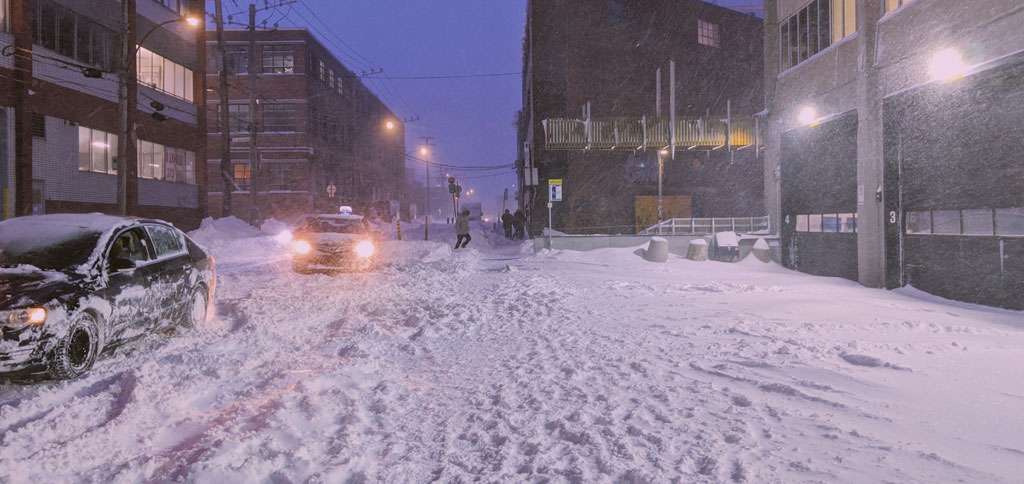
Canada is better prepared for the intense cold than the USA - Source: Image bank
Few people know that the 6 largest urban centers in Canada concentrate more than 60% of the entire country’s population. It is no coincidence that cities like Montreal and Toronto (the largest in Canada) are located to the south, bordering the USA. Living in cities where latitude increases significantly in Canada will cost a few degrees less on the thermometer, for this reason, the country’s largest demographic concentrations will always be to the south.
Read also: “Is Canada better prepared for the intense cold than the USA?”In general, the cold in Quebec will vary depending on the length of the day (sun) and the amount of snow that falls in more distant locations. For example, while Montreal already starts to see a little heat and almost no snow or ice on the horizon between the end of April and the beginning of May (in the middle of spring), in Quebec City, you will only see this happen between May and June.
Only 300 km separate Montreal from Quebec, but due to Quebec’s greater proximity to the Atlantic coast and its more northerly latitude, the city is about 2 to 3 degrees colder than Montreal, in addition to receiving a good few centimeters more snow during winter.
8. How resilient to isolation and lack of integration can you be?
In this regard, immigrants under the age of 35 have the best advantage. At this age, proximity to the workplace is less likely to be one of the main factors in choosing where to live, so families are more willing to live in more distant and isolated cities.

Beautiful landscapes of Quebec - Source: Image bank
The safety of neighborhoods to raise their children and the cost of living has become more significant for parents in this age group, as there is not a huge difference in the quality of elementary schools overall in Canada. Something that no longer happens in secondary school, where the supply of better schools becomes tighter. Generally, it is at this stage that many parents change cities or neighborhoods to be close to the best.
Read also: “Challenges of settling in a smaller city in Canada“
Living in more distant cities can take a higher toll when it comes to the integration and social life of adults and teenagers. For those who have small children, this may not be as important, as the integration process ends up being somewhat osmotic, as you will need to communicate with other parents more frequently, something that rarely happens for those who already have children over 12 or 13 years old.
In short, the further away from large centers like Montreal, the fewer immigrants and the more natives of the region. Fewer communities of Brazilians and, consequently, more isolation, a hand and little human warmth from fellow countrymen are needed.
Final considerations
Now that you know the most important criteria when choosing cities in Quebec, it’s up to you to start your homework by researching each of the cities you want to call home in more depth.
And without wanting to discourage those who are already parents, choosing the city where you will live in Quebec is only half the battle. For ideal planning, I would say that you need to go a little further than that, going as far as choosing the neighborhood where you will live and, if you have children, the school where they will study.
I know this may seem like a lot of pressure on your shoulders, but believe me, going to this level of planning will save you a lot of headaches in your first few days in Quebec.
For those who, in addition to having time to plan, also have the means to take an exploratory trip to Canada, I recommend reading this post here: 8 things you should do on an exploratory trip to Canada before immigrating
Well, that’s what I had to say in my post today. In the next few days I will publish a list of the best cities to live in Quebec. Sign up for our newsletter to receive weekly updates about life in Canada, especially in Quebec and Montreal.
See you in the next post! 😉

Marco Vasconcelos
Brazilian, webmaster, and e-commerce specialist living in Montreal since 2018. Founder of Você no Quebec, sharing practical guides, housing tips, and real-life experiences in the province to help Brazilian and international newcomers transition smoothly.
Read more about Marco →