Is Canada better prepared for the extreme cold than the US?
| Updated in August 2026. This text compares the infrastructure of Canada and the United States in the face of extreme cold, using the 2021 and 2022 climate events as a reference. The structural comparison remains valid, it is about the thermal insulation of buildings, heating networks, snow removal fleets, and preparedness culture, and none of that has changed. Treat the cited dates as the examples that originated the analysis, not as a portrait of the most recent winter. |
Canada vs US, who does better with the cold?
To illustrate this comparison in a practical and quick way, let’s talk about two cities (almost neighbors) and how their populations face the same climatic conditions. Let’s talk a little about Montreal and New York.
I have lived in the city of Montreal for over 4 years and am already in my fifth winter here. The city of Montreal is about 600 km away from New York (approximately 6 hours by car) and for obvious reasons, our winters share many bad weather conditions such as polar vortexes, cyclones, and other gifts that Mother Nature bestows upon us between the months of November and February.
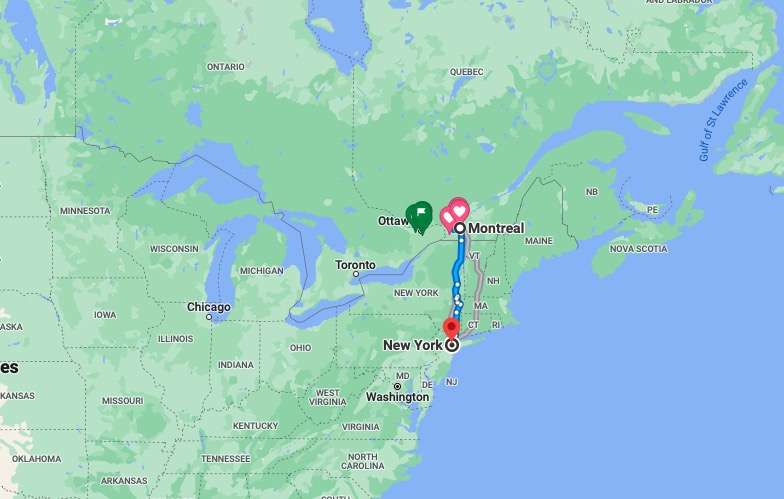
Source: Google Maps - Montreal / New York route by car.
That being said, let’s get to the facts that are definitely NOT common between these two cities when they have to face sub-zero temperatures accompanied by blizzards.
1 - Blizzards in Canada vs US
Blizzards with 30, 40, or even 60 cm of snow in Montreal do not represent major obstacles or disruptions to the daily lives of its residents, since the government invests heavily in machinery and technology to remove the snow, almost in real time. Commerce, schools, and businesses, nothing stops because of the cold and bad weather conditions. After a few good centuries of deaths and hard work (Yes, Canada has existed since 1553), it was impossible for these people not to learn to live in the cold; after all, it has been over 450 winters of trial and error.
The so-called truckloads fill about 300,000 snow trucks every winter just in the city of Montreal.
The city runs one of the largest snow removal operations in the world. It takes an army of 3,000 workers to remove snow from Montreal’s 10,000 kilometers of streets each winter. This adds up to US$ 165 million a year in severe weather management costs.
Source: Montreal City Hall Website
After a major storm like the one the city had last week, crews will work around the clock. Streets are cleared of cars; snow is plowed and loaded into trucks and hauled to one of the city’s 29 snow dumps.
2 - Life doesn’t stop in Canada because of extreme cold
Schools only close if commuting conditions are affected by freezing rain. Under these conditions, walking or driving represents a real safety risk, as everything turns into a skating rink and there is no technology to get around this, other than staying at home and waiting for the temperature to rise and break the freezing point. I confess that in the 5 winters I’ve lived here I’ve rarely seen this happen.
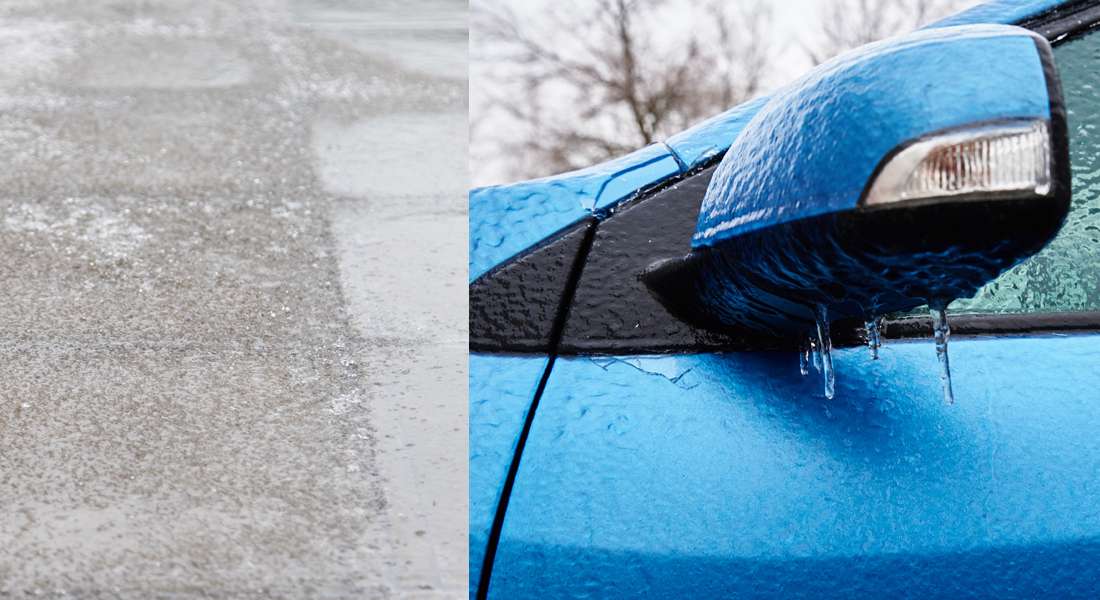
Freezing rain Everything freezes forming a layer of ice on the surface. Source: Image bank
3 - Electric power and heating system in Canada
Heating in Canada, besides being very efficient, is also much cheaper than in the US, because the province of Quebec alone, Canada’s largest province and where Montreal is located, has the largest energy grid in North America.
And if you think this miracle happens with thermal sources, nuclear energy, or oil, brace yourselves, everything is generated by hydroelectric plants (which don’t freeze). This energy grid is responsible for over 70% of energy consumption throughout Canada, and the surplus is even sold to neighboring US states like New York state. Thus, we have one of the cheapest energy bills in the Americas if we compare it to the US.
Another curious fact is that the province of Quebec does not charge its residents a water usage fee.
4 - Everything cleaned quickly, almost in real time
Roads are cleared very quickly with snow removal, and thus fewer accidents are recorded. Furthermore, drivers in Quebec are required to change their regular tires for winter tires between December and March.
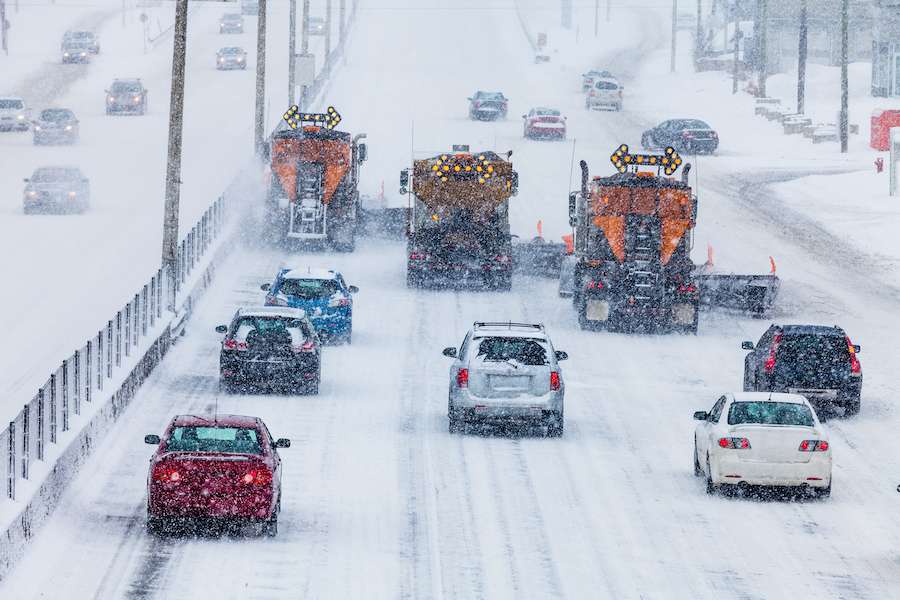
Snow removal operation on roads in real time. Source: Image bank
5 - Everything warm and cozy efficiently
Houses, public transport, schools, and all commercial establishments are very prepared to withstand sub-zero wind chills below -30 degrees without a crisis. I remember well the winter of 2021 when we had the polar vortex in January and nothing stopped around here.
No one wears a snow jacket inside the house; on the contrary, you even feel hot because of how efficient the heating is in the houses. As mentioned before, everything is heated with electric power, which is safer and cheaper for Canadians.
On the other hand, our neighbor cannot say the same.
This is so true that in US cities bordering Canada, you can see Canadian companies providing service or aid to their less prepared neighbors.
I’ll leave a recent report here showing the damage of the cyclone that ravaged the US this Christmas of 2022.
CNN Brazil report on winter in the US
Conclusion
Now do a web or press search and try to find tragedies like that in Canada. We face blizzards at least 4 or 5 times a year during the Canadian winter, and it’s much easier to see news of people dying during the extreme summer heat waves than our winter.
Well, I think with these arguments I must have been able to answer the title question. Want to know the complicated side of the cold around here? Watch the videos on my channel on TikTok Você no Quebec.
Read also: Montreal in winter: is it worth visiting or is it crazy? and Winter adventure in Quebec to put on your list.
Well, that’s what I had to say today. If you want more tips like these, subscribe to our newsletter to receive updates on life in Canada, especially in Quebec and Montreal.
See you in the next post! 😉

Marco Vasconcelos
Brazilian, webmaster, and e-commerce specialist living in Montreal since 2018. Founder of Você no Quebec, sharing practical guides, housing tips, and real-life experiences in the province to help Brazilian and international newcomers transition smoothly.
Read more about Marco →