
How does the school system work in Quebec?
| Updated August 2026. The structure of Quebec's school system (preschool, elementary, secondary, CEGEP and university) barely changes — which is why this guide stays useful. What does change every year are the fees and the registration deadlines. The figures below were reviewed for 2026. Before making any decision, confirm with the centre de services scolaire in your area. |
Types of schools in Quebec
In Quebec, children from six to 16 years old must attend school. Schooling consists of three levels: elementary (also known as primary) school, secondary (high) school, and college (CEGEP). Here is a breakdown of the types of schools in Quebec:
Read also: “6 Steps to choose a High School for your child in Quebec”
1. Public schools in Quebec
The public school system in Quebec provides instruction primarily in French, with limited instruction in English. There are 64 French-language public school boards across the province, and public schools are free to attend.
2. English schools in Quebec
There are nine English-language school boards in Quebec, with education available from preschool to college. To enroll your child in an English-language school, they must meet one of the following criteria:
- They completed most of their elementary or secondary studies in English in Canada;
- Their brother or sister completed most of their elementary studies in English in Canada;
- Their parents completed most of their schooling in English in Canada;
- Their parents attended school in Quebec after August 26, 1977, and could have been declared eligible for instruction in English at that time.
Children who are permanent residents of Quebec and who qualify for an eligibility certificate can also apply. To apply for an English-language school, parents must have their child declared eligible to learn in English by contacting their local English-language school board. Some English schools also include a French immersion program.
A note regarding temporary residents: children of foreign nationals (such as embassy staff, university students in master’s or doctoral programs) may be eligible for English-language schooling under temporary authorizations if their stay is short and structured, allowing them to follow classes without the immediate need to adapt to French.
3. Private schools in Quebec
While most students attend a publicly funded school, a percentage of students in Quebec attend a private school. Part of the reason for this is that the Quebec government provides a subsidy for each child attending any private school that meets the province’s standards.
Read also: “6 Steps to choose a High School for your child in Quebec”
Even if you are eligible for the government subsidy, you will still have to pay about 30% of the total costs. In Quebec, private school education costs vary widely. You can expect to pay from $5,000 to $69,000 CAD per year (without taking any government subsidy into account). Parents usually choose a private school education based on the school’s approach to learning, to meet their child’s specific educational needs, or for religious beliefs.
Note: For reference, only about 10% of parents in Canada enroll their children in private schools.
4. Homeschooling
A small number of parents in Quebec choose to opt out of public and private schools to educate their children at home, which is known as homeschooling. Parents who choose to homeschool are required to comply with government regulations regarding the curriculum or learning projects taught, as well as an annual evaluation. Parents are also required to submit a written notice to the Minister and their school board on or before July 1 of each year.
 Important Tip! Important Tip!Do not get carried away by the idea that everything works perfectly in Canada, even when talking about the highly praised Canadian education system. Generally, public schools have a very high standard compared to Brazil, but make no mistake about the differences in teacher quality, student performance, and infrastructure between schools. All these factors can influence the final performance of each institution. To help parents with this task, the Fraser Institute created a tool that shows the rankings of Canadian schools based on results obtained in tests carried out every year by the Ministry of Education. You can do your search at School Rankings. |
Early childhood education in Quebec
In Quebec, children begin school at age five. Before that, early childhood education (ECE) is available. This age-appropriate, play-based learning is typically provided to children between the ages of three and five in a preschool setting.
Quebec offers a free kindergarten program (known as its Preschool Education Program) for four-year-olds, designed to foster children’s development and prepare them to enter kindergarten at age five. If your child is at least four years old by September 30 of the school year, parents can enroll in the program by contacting their local school board.
Additionally, private preschool programs are available in the province for children aged two and older. Some early childhood centres (CPE) in Quebec operate as non-profits and offer spaces at a reduced rate of $9.65 CAD per day in 2026 — this amount is re-indexed every January 1st. Worth knowing: the old additional contribution scaled to family income no longer exists. It is a single flat rate for everyone now. It is important to be aware of the waiting lists, as these spots are highly sought after.
Alternatively, parents can register their child in a non-subsidized private daycare. That is a different league of cost: expect to pay $35 to $60 CAD per day, depending on the region and the service. Part of it comes back through the childcare expense tax credit, but the monthly outlay is far higher than at a CPE.
Another important tip here! After 18 months of residence in the province, it is possible to receive a refund of up to 80% of the amounts paid for private daycare services (known as garderies in Quebec). This tax credit is processed when you file your annual income tax. There is no credit for amounts paid in government-subsidized garderies.
Types of preschool programs in Quebec
When it comes to choosing a preschool program, look for one with Registered Early Childhood Educators (RECEs) and ask to visit. Here are some types of preschools available:
- Local community or non-profit cooperative schools: These are usually the least expensive, as parents volunteer as teacher assistants alongside professional teachers.
- Religious schools: Usually linked to religious institutions and may include religious education (it is not essential for children to follow the same religion as the school).
- Private schools: These are more expensive and vary considerably, from small home setups to large custom schools.
- Montessori schools: Montessori is more of a philosophy of life than a teaching method.
| Important Tip! Early education can be a good option for families who do not have English or French as their first language, as it will help the child learn these languages before starting kindergarten or elementary school. |
Grade structure and education levels in Quebec
Public education in Quebec is divided into three levels: elementary, secondary (high school), and college.
Elementary
In Quebec, elementary school begins with kindergarten (maternelle) at age five and goes up to Grade 6. Kindergarten is not compulsory, but parents can enroll their children if they turn five by September 30 of that year. Generally, students graduate from elementary school at age 11.
Secondary
Secondary school (école secondaire) runs from Grade 7 to Grade 11. In Quebec, there is no Grade 12. Generally, students start at age 11–12 and finish Grade 11 at age 16. After completing Grade 11, students receive their Diploma of Secondary Studies (Diplôme d’études secondaires).
Read also: “6 Steps to choose a High School for your child in Quebec”
College
Instead of Grade 12, students in Quebec typically go to college (known as CEGEP). College education is designed to bridge the gap between completing secondary school in Grade 11 and attending university.
Students can attend a college specializing in pre-university education or a technical college. Pre-university courses last two years, while technical or vocational courses last three years. Publicly funded colleges typically combine pre-university and vocational programs in one school, while private colleges may offer completely separate programs. At the end of college, students earn a Diplôme d’études collégiales (DEC).
After completing college, students can apply to university, undergo vocational training, or enter the workforce.
How to enroll your children in school in Quebec
In Quebec, children are eligible to start kindergarten if they turn five by September 30 of that year. The different school boards in Quebec are responsible for defining school boundaries, and generally, students can only attend a school in the area where they live. However, parents can make a cross-boundary request.
Information required to register your child at school:
- Child’s original long-form birth certificate, showing the names of both parents;
- Proof of Canadian citizenship or residency;
- Study or work permit for temporary residents;
- Proof of residence in Quebec, such as a lease, driver’s license, or utility bill;
- Most recent report card.
Steps to enroll your child in a school in Quebec:
- Check your child’s home school by visiting the local school board.
- Follow the instructions to register your child online.
- Complete an application form that typically contains information about your child, home address, medical information, parent/guardian info, and emergency contacts.
- Provide proof of your child’s identity, proof of residency, and copies of previous report cards.
- If you wish to enroll your child in an English school in Quebec, ensure they meet the requirements for a Certificate of Eligibility first.
- For secondary school, your child will meet with a guidance counselor to discuss their previous schooling and career goals. They will also help your child choose courses.
| Important Tip! Provide new teachers with previous report cards to help them understand what your child has already learned. |
If you need help, there are newcomer service agencies in your area that can help you register your child in school or find an interpreter.
My child doesn’t speak French, how will they adapt to school in Quebec?
Welcome program for students with no knowledge of the French language
Ten out of ten parents ask the same question in social groups about their concern regarding French and their children’s adaptation to school, since only English is commonly taught as a second language in the Brazilian school curriculum.
And I must say that this concern is not without reason. Indeed, learning French takes longer than English for a child with no prior contact with the language. However, children of Portuguese speakers adapt quickly to French according to local teachers.
Read also: “Canadian census reveals Quebec families are speaking less French at home”
For this purpose, there are welcome classes or classes d’accueil in Quebec schools. In them, students can stay for 1 to 2 years (depending on their development) and their age. During the adaptation process, students have intensive classes in French, mathematics, arts, and physical education. Other subjects like geography, history, chemistry, and physics are resumed once the student transitions to the regular stream.
As a basic rule, the younger the students are (up to age 10), the less time they will need in the welcome class. Unfortunately, the opposite is true for older students, sometimes requiring supplementary education for foreign children who enter school after age 15.
My twin daughters arrived in Quebec at age 13 and still stayed in a welcome class for a year and a half before entering the regular stream, even though we had made a small investment in French a year before arriving here.
During the enrollment process, your child will undergo a placement test to determine which welcome class level they fit into. It is worth noting that not all schools have welcome classes, a factor that can limit your choice of where to live, since you must enroll your children within a certain radius of the school to facilitate access. Remember, this is Canada, and weather conditions can be a challenging factor with long distances.
School-related expenses
Although public education in Quebec is free, there will still be some school-related expenses you should budget for. They include:
Before and after school programs
School boards in Quebec are required to provide before and after-school care for school-aged children from four to 12 years old. Subsidized childcare is available at the reduced rate of $9.65 CAD per day (2026 figure), making it affordable for most families. For example, the English Montreal School Board offers an enriched before and after-school program (B.A.S.E.) subsidized by the Quebec government.
School Supplies
Children are typically required to bring basic stationary supplies when they start a new grade or school year. Typically, schools will provide a list of required items (e.g., pencils, crayons, sharpener, ruler, calculator, glue stick).
You may also need to buy a lunch box, water bottle, backpack, and gym shoes. The provincial government of Quebec provides an annual financial supplement of $105 CAD per child aged four to 16 for families qualifying for Child Assistance payments.
Textbooks are provided by the school free of charge and are returned at the end of the semester or school year. Some schools may also provide assistive technology to students who need additional support (e.g., access to a Chromebook).
School uniforms
Unlike other provinces in Canada, in Quebec, school uniforms are common for most schools. In the English school system, almost all elementary and secondary schools have a mandatory uniform. Typically, private schools also require a uniform. Parents need to consider the cost of a school uniform, and the school usually provides information on where you can buy it.
Transportation
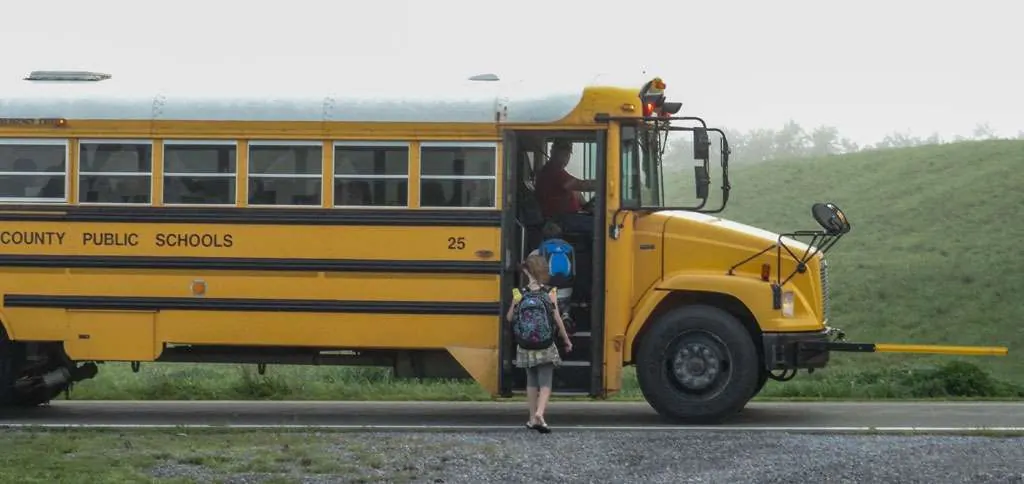
In Quebec, school bus transportation is provided free of charge for kindergarten students who live at least 800 meters away, elementary students who live at least 1.6 kilometers away, and secondary students who live at least 2 kilometers away.
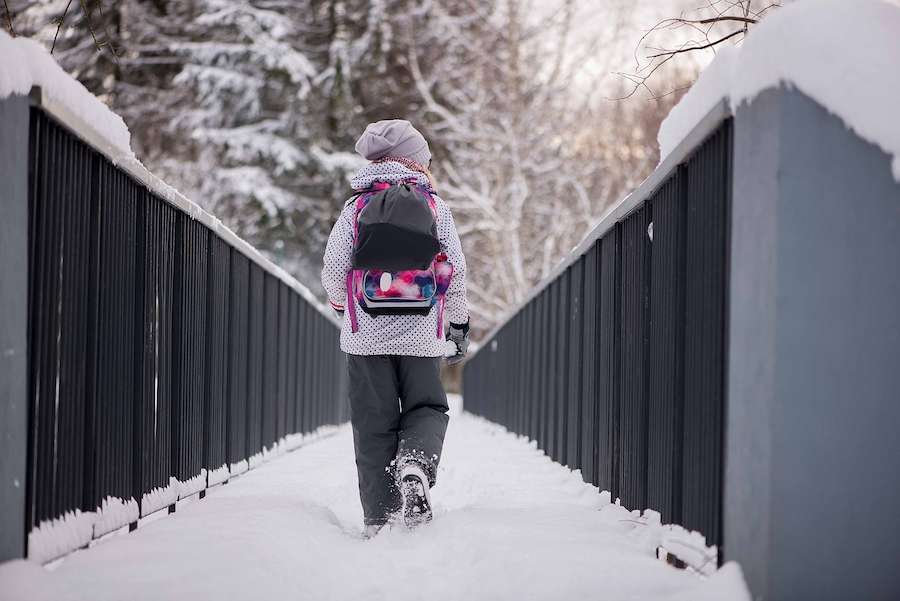
Older students who are not eligible for a school bus may take public transit to and from school. In this case, you would need to consider the cost of public transit in your budget.
Field trips
Field trips are often organized by schools for students to visit places relevant to their education, such as museums, cultural institutions, and outdoor activities. There is usually a cost involved to participate. Older children may also have the opportunity to participate in overnight camps or school trips, with costs to cover transportation and accommodation. The school may be able to provide financial support to parents in need.
School fundraising
Fundraising is common, and typical activities include pizza lunches, book fairs, bake sales, or holiday gift sales. The amount parents spend over a school year varies. The money raised is typically used to fund school trips, buy new technology, or add learning resources.
Conclusion
As a Brazilian immigrant, I can say that one of the best things about moving to Canada, especially Quebec, was witnessing the adaptability, resourcefulness, and resilience of my daughters.
They arrived here at age 13 and are already preparing for CEGEP (now in English) next year. They speak, read, and write perfectly in three languages (Portuguese, French, and English) and are already studying Spanish as an extra subject at school. Yes, this includes Portuguese, as I have seen children of Brazilians of the same age losing contact with the language because they were not taught to write it during childhood.
This was without a doubt the best choice we made, as there is no better place to experience bilingualism and multilingualism in Canada than Montreal. I have friends in other provinces, and it feels like a repetition of the same monolingual environment. Do not expect your children to learn French in other Canadian provinces as a third language in the same way they do in Montreal, because it simply won’t happen.
The biggest challenge is ours as adults; for them, learning two languages at the same time is like playing in the park. And I won’t even go into detail about the surprising and deep academic level I saw worked with 16-year-old students, presenting school assignments as if they were doing a college thesis. Philosophy, encouraging critical thinking, volunteer work, financial education, cooking, and nutrition classes prepare these young people for an independent life much earlier than we expect in Brazil.
To close, they are currently taking a lifeguard course offered for free by their school, which usually costs around $1,000 CAD. After training, they will have a certificate that will allow them to work part-time during summer vacations in public pools in Montreal. Not to mention that such a skill will add many points to their academic resume when applying for universities or colleges.
I can state with conviction that it would be a monumental financial effort to afford even a fraction of the benefits I listed here if we were still in Brazil.
I hope this has helped anxious parents filled with doubts about whether coming to Quebec is a good choice for their children.
See you in the next post! ;)

Marco Vasconcelos
Brazilian, webmaster, and e-commerce specialist living in Montreal since 2018. Founder of Você no Quebec, sharing practical guides, housing tips, and real-life experiences in the province to help Brazilian and international newcomers transition smoothly.
Read more about Marco →