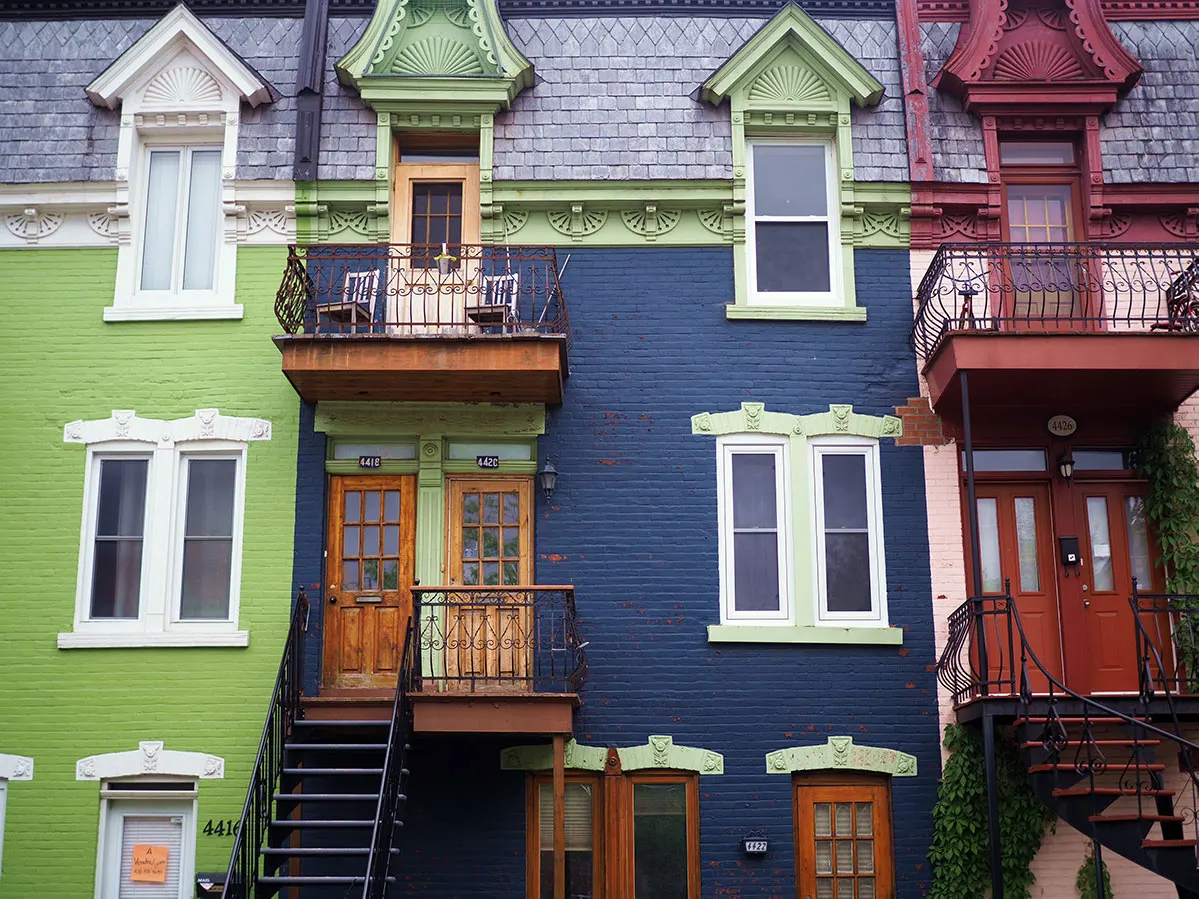
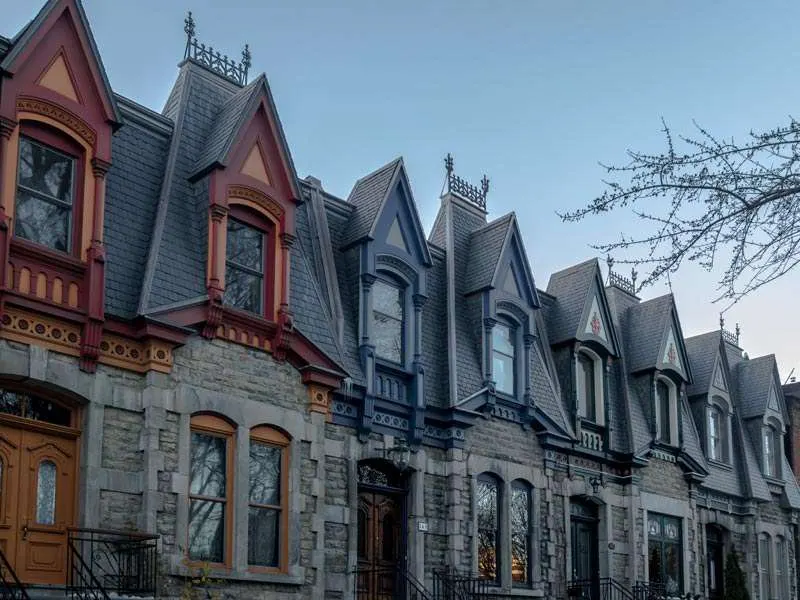
10 Cities in Quebec are among the cheapest to live in Canada
| Quick Summary (2026-2027): Living outside the Greater Montreal metropolitan area cuts housing expenses by 35% to 50%. Regional hubs like Trois-Rivières, Saguenay, Sherbrooke, and Drummondville offer average 2-bedroom rentals (4 ½) between $1,050 and $1,350 CAD/month. The provincial minimum wage stands at $16.60/hour. However, having strong French proficiency is essential for career opportunities outside Montreal. |
Cost of Living Canada and Cities
I’ve already written a lot about cities in Quebec on other blogs and I even recorded a video giving the bad news about prices in the real estate market in 2023. But here’s the thing, it’s up and down, every year a company appears to do some heavy lifting on the subject, so in today’s post, the focus goes to the company Point2, specialized in the real estate market in the USA and Canada.
According to Point2, which carried out an extensive survey crossing data from Statistics Canada from 2021 and its database, 79% of all Canadian households spend less than 30% of their income on housing-related costs.
To further clarify the above, take as a reference for housing-related costs the following expenses: mortgage payment, when applicable to property owners, property taxes and condominium fees, along with the costs of electricity, heating, water and other municipal services, while renter’s housing costs include, when applicable, rent and the costs of electricity, heating, water (with the exception of Quebec) and other municipal services.
How true is this for tenants in Quebec?
Before you think this 30% percentage is too good, here’s a warning for anyone arriving in Canada now. In the last 10 years alone, property values have increased by an average of 48%, while the average salary in Canada has increased by just 5.5%.
Highlighting that a large part of the overvaluation of properties occurred during and after the COVID-19 pandemic, due to the lack of inputs and inability to carry out projects for at least 2 years, according to data revealed by associations linked to the Canadian real estate market in 2022.
In short, who are these little guys who have an average housing cost equivalent to 30% of their family income? It’s certainly not us, the newcomers of 3 or 4 years ago. These people listed in the study have lived in Canada for more than 10 years, during which time it was possible to buy a house with an annual household income of $50,000 CAD.
For three years now, those same 50 thousand have not bought an apartment with just one bedroom. As a result of this scenario, renting has also become more expensive, especially for those who are arriving.
To better illustrate what I just said, I will take as an example a recent conversation I had with my boss where I complained about the price of real estate in Quebec and the difficulty of buying due to market pressure and high interest rates.
He, in turn, said that thank God, he pays just over $300 CAD on the mortgage on his house. Of course he was referring to an old contract for a typical 3-bedroom property in a middle-class neighborhood in Greater Montreal.
Something that today doesn’t cost less than $3,000 CAD. Even for someone earning minimum wage in Quebec, which is certainly not his case, it is possible to buy a house with that mortgage amount.
So, in a much more realistic scenario, I would say that housing costs (house or 3-bedroom apartment) for those renting in cities like Montreal should vary between 40 and 50% considering that they have a gross income of at least $80,000 CAD/year.
Just for reference, the average salary in Montreal is approximately $48,000 / year, so don’t expect to get large spaces to live if you choose this city to start your story in Canada, unless you already start life here with a good salary.
Top 15 cheapest cities to live in Canada
Message given about reality versus expectations, let’s get to the numbers that matter. In the following list you will see that the survey takes into account both owners (right column) and tenants (left column).

Top 15 Canadian cities with low housing costs - Source: Site Point2
Trois-Rivières topped Point2’s list with an average monthly cost of $676 in 2021. Saguenay ($689), Sherbrooke ($760), Lévis ($892), Ville de Quebec ($904), Longueuil ($907), Gatineau ($968) and Montreal ($969).
The property reference used here may vary from city to city, but in general, it is based on a small two-bedroom apartment. Expenses such as electricity, water and heating are also not included, as mentioned at the beginning of the text. An honest caveat about the numbers above: they come from a Point2 survey crossing Statistics Canada data from 2021, and the absolute values have aged — the cost of housing in Quebec has risen a lot since then. What still applies is the hierarchy: Trois-Rivières, Saguenay and Sherbrooke remain among the most accessible cities in the province, and the difference in relation to Montreal and the Quebec region remains large. For current values, cross reference the SCHL/CMHC rental market report and remember that the provincial minimum wage has been $16.60/hr since May 2026.
Read also: “How much does it cost to live in Canada in 2026?”
Even in 2021, these values would not represent reality.
Top 15 most expensive cities to live in Canada
For those who are curious about the opposite, here is the list of the most expensive cities. If your pocket is ready to deal with this reality, here they are.

Top 15 Canadian cities with high housing costs - Source: Site Point2
Surprisingly, the city of Vancouver, known as the villain of high housing costs in Canada and several times listed as one of the most expensive cities to live in the world, is not at the top of the list.
Coincidence or not, we had the chance to get to know Oakville in person, as we have Brazilian friends living there who immigrated at the same time as us. It is a very well-structured suburban city in Greater Toronto, with a low population (around 234 thousand inhabitants) and I would even say charming.
In my opinion, I believe that this high cost of housing is due to a particularity about the city’s public schools, as some of them are listed among the best in Canada.
READ ALSO: “How does the school system work in Quebec?”
Regional Rent Comparison Across Quebec (2026/2027 Estimates)
Here is a realistic market snapshot for a standard two-bedroom rental (4 ½) across primary Quebec regions:
| City / Region | Average Rent 4 ½ (2026/2027) | Cost Level | Key Highlights |
|---|---|---|---|
| Trois-Rivières | $1,050 – $1,250 CAD | Very Low | Centrally located between Montreal and Quebec City; strong university presence. |
| Saguenay | $1,000 – $1,200 CAD | Very Low | Most accessible real estate; robust industrial base and stunning outdoors. |
| Sherbrooke | $1,150 – $1,350 CAD | Low | Major Eastern Townships hub; leading universities and healthcare services. |
| Drummondville | $1,100 – $1,300 CAD | Low | Strategic Highway 20 location; growing manufacturing sector and high employment. |
| Quebec City (Capitale-Nationale) | $1,350 – $1,600 CAD | Moderate | World-class safety, high quality of life, and public administration & tech hubs. |
| Gatineau (Outaouais) | $1,500 – $1,750 CAD | Moderate-High | Neighboring Ottawa; popular with federal workers seeking lower housing costs. |
| Montreal (Island) | $1,850 – $2,300 CAD | High | Cultural and economic metropolis, but the most competitive rental market. |
Frequently Asked Questions About Quebec’s Most Affordable Cities (FAQ)
Which cities are the cheapest to live and rent in Quebec for 2026 and 2027?
Trois-Rivières, Saguenay, Sherbrooke, Drummondville, and Saint-Hyacinthe rank among the most affordable cities in Quebec. While rents have increased, a standard two-bedroom apartment (4 1/2) averages between $1,050 and $1,350 CAD in these regional hubs, compared to $1,850 to $2,300 CAD in Montreal.
What is the official minimum wage in Quebec?
Quebec’s general minimum wage is set at $16.60 CAD per hour (with indexed adjustments evaluated annually by the provincial government each May).
How does Quebec’s Bill 31 affect tenants and lease transfers?
Bill 31 modified tenancy rules before the Tribunal administratif du logement (TAL), allowing landlords to decline a lease transfer (cession de bail) without requiring a serious motive, terminating the lease instead of allowing the old rent to be passed on to a new tenant.
Can you live in regional Quebec cities speaking only English?
It is not recommended. Mid-sized cities such as Trois-Rivières, Saguenay, and Sherbrooke are predominantly francophone (over 95% French speakers). Professional integration and daily life practically require intermediate-to-advanced French proficiency.
What is the average monthly cost of living outside Montreal?
A single person typically spends between $1,700 and $2,200 CAD per month in regional Quebec, while a family of three averages between $3,200 and $4,000 CAD (covering housing, groceries, utilities, and transportation).
Final Considerations
The truth is that rankings here are always biased and should not be taken too literally, as the reality of the cost of living in Canada is much less florid than what is sold. Therefore, come prepared so as not to be scared of buying a pig in a poke.
On the other hand, I cannot ignore the fact that the cost of living in Quebec is the lowest in Canada when compared to other provinces in the country, but there are many other factors that must be considered as a whole before making a decision about choosing the city where you are going to live.
There is no point in choosing a very remote place just because it has a lower rental cost if there are no job market prospects in your area that pay a salary that meets your expectations. After all, you’re not coming to Canada just to trade sixes for half a dozen and pay bills.
I hope this information helped once again. If you want more tips like this, sign up for our newsletter to receive updates about life in Quebec and your first steps as a newcomer.
See you in the next post! 😉

Marco Vasconcelos
Brazilian, webmaster, and e-commerce specialist living in Montreal since 2018. Founder of Você no Quebec, sharing practical guides, housing tips, and real-life experiences in the province to help Brazilian and international newcomers transition smoothly.
Read more about Marco →