

5 Major Cultural Differences Between Quebec and Other Canadian Provinces
What are the particularities of the province of Quebec?
The province of Quebec, in Canada, has some peculiarities in relation to the rest of the country. Here are some of the most relevant:
1 - Language
Quebec is the only French-speaking province in Canada, with French being the official language. All of the country’s other nine provinces and three territories have English as their official language, although some also have French as a secondary language, as is the case of New Brunswick, the only officially bilingual province in the country, with a very large percentage of its population speaking English and French.
Contrary to what many people think, Quebec is not bilingual, even though it is greatly influenced by the unofficial bilingualism of Montreal, a city that holds almost half of the population of the province of Quebec, with approximately 4.5 million inhabitants.
Read also: “Canadian census reveals that Quebec families are speaking less French at home”
2 - Religion
Quebec has a strong Catholic tradition, mainly due to its French colonization. The 2011 census showed that around 75% of Quebec’s population declared themselves Catholic.
In addition to Catholicism, other minority religions such as Islam, Judaism, Hinduism and Protestantism are joined by atheists and agnostics. Unfortunately I couldn’t find accurate data for these religions, so I’m in debt.
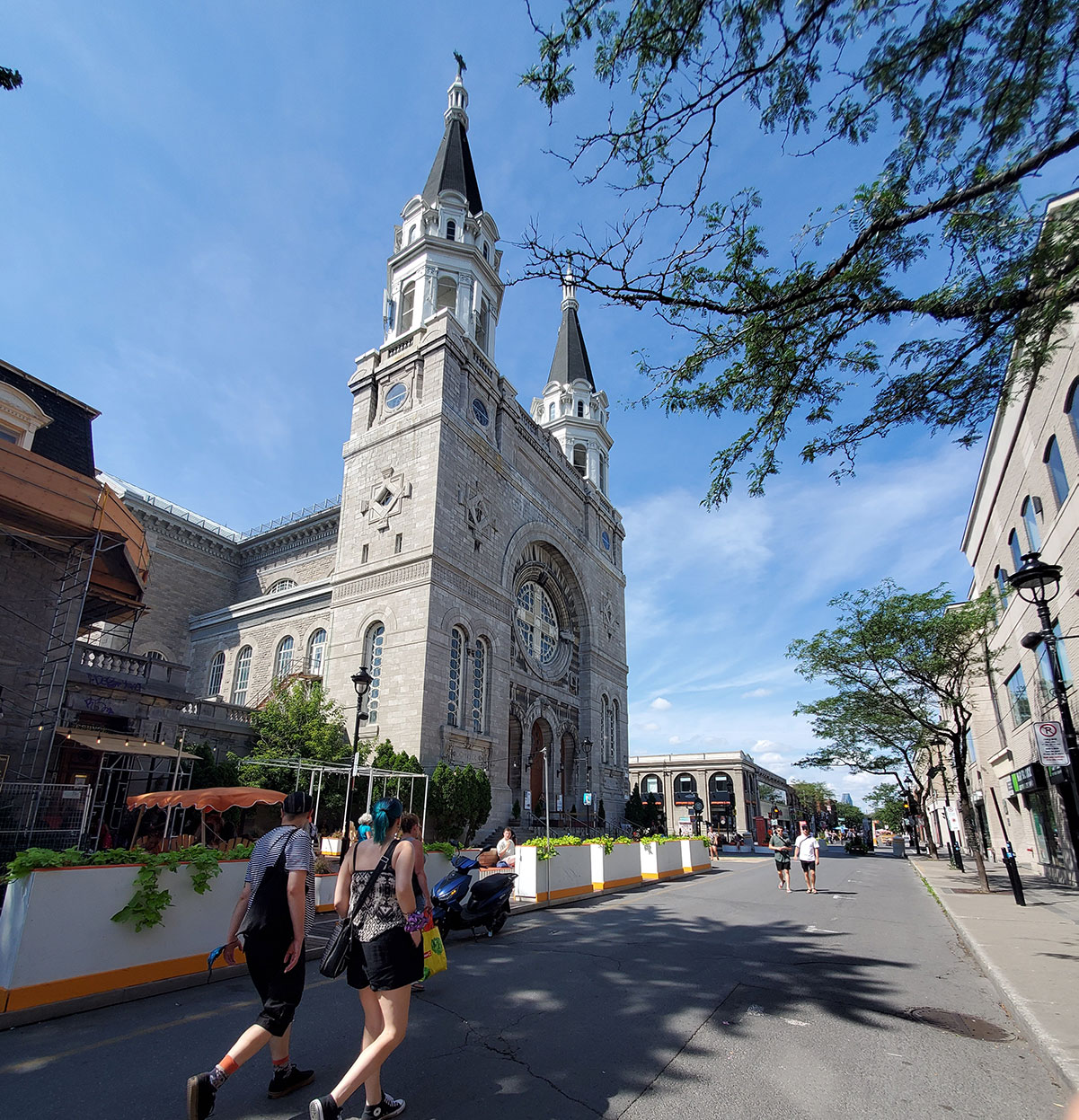
Churches in Montreal - Source: Personal archive
On the other hand, the rest of Canada (British colonization) has a strong presence of Protestantism as its main religion, in addition to the already mentioned Islam, Judaism, Hinduism, Buddhism, among others.
A curious fact about Catholicism in Quebec becomes quite evident when we come across a truly impressive number of churches in the province. Just to give you an idea, in the city of Montreal alone, there are more than 600 of them. Some founded in 1700.
The influence of the Catholic religion was so strong during colonization that many of the Québécois (native to Quebec) swear words were originated by feuds between the population and the Catholic church, such as the famous ones: Tabarnak (which comes from tabernacle), Crisse! (which comes from Christ or Christ), Osti or Esti (which comes from hostie or Ostia), Câlice or Calisse (which comes from calice or goblet) and Sacrament (which comes from sacrement or sacrament).
3 - Etina and Diversity
According to the 2011 census, the racial makeup of Quebec was: 87.2% White, 11% Visible Minority Group, and 1.4% Aboriginal (1.1% First Nations, 0.5% Metis, 0.2% Inuit).
Visible minority groups include: Asians (4.1%), Blacks (3.2%), Arabs (2.2%), and Latinos at 1.5%.

Canada has been ranked as one of the 10 most LGBTQIA-friendly travel destinations in the world, but Quebec is not one of them. Source: Bank and images
There are also a large number of indigenous groups who refuse to participate in the census for political reasons on the issue of indigenous sovereignty.
More recent census data shows that the white population in Quebec has been falling over the years, mainly due to factors such as immigration, but Quebec still has by far the whitest population in Canada when compared to other provinces.
Take as an example the province of British Columbia, the region where the city of Vancouver is located, with its more than 600 thousand inhabitants, of which more than 40% are Asian.
I also can’t help but mention that dealing with a population where the majority is white also brings some not-so-cool social consequences, such as a higher level of racism. To be quite honest, my family and I have experienced some racist situations in relation to our immigrant status, but when it comes to color, you might be surprised to see how black people are seen and treated here.
The same can be said for gender issues, Quebecers are even tolerant of displays of homosexual affection, but only because human rights law is strong and well enforced here.
4 - Legislation and Immigration
Just like language, religion and culture, Quebec could not be different in terms of its laws and immigration process. In order not to expand too much on this post, I will leave this topic to two other articles I wrote explaining this.
- This one talks about strange laws: “Discover 17 very strange laws in Quebec for newcomers”
- And this one talks about the immigration process: “Why does the province of Quebec have its own immigration policy?”
You will discover that living in Quebec is like living in a country within another country.
5 - Architecture, Social and Urban Life
This is probably one of the strongest reasons why I chose to live in Quebec, more precisely in Montreal. Living in Quebec is living in an atmosphere completely different from the rest of Canada. You will notice that the province has the charm of European cities, mixed with the madness of large urban centers in the USA when we talk about Montreal.
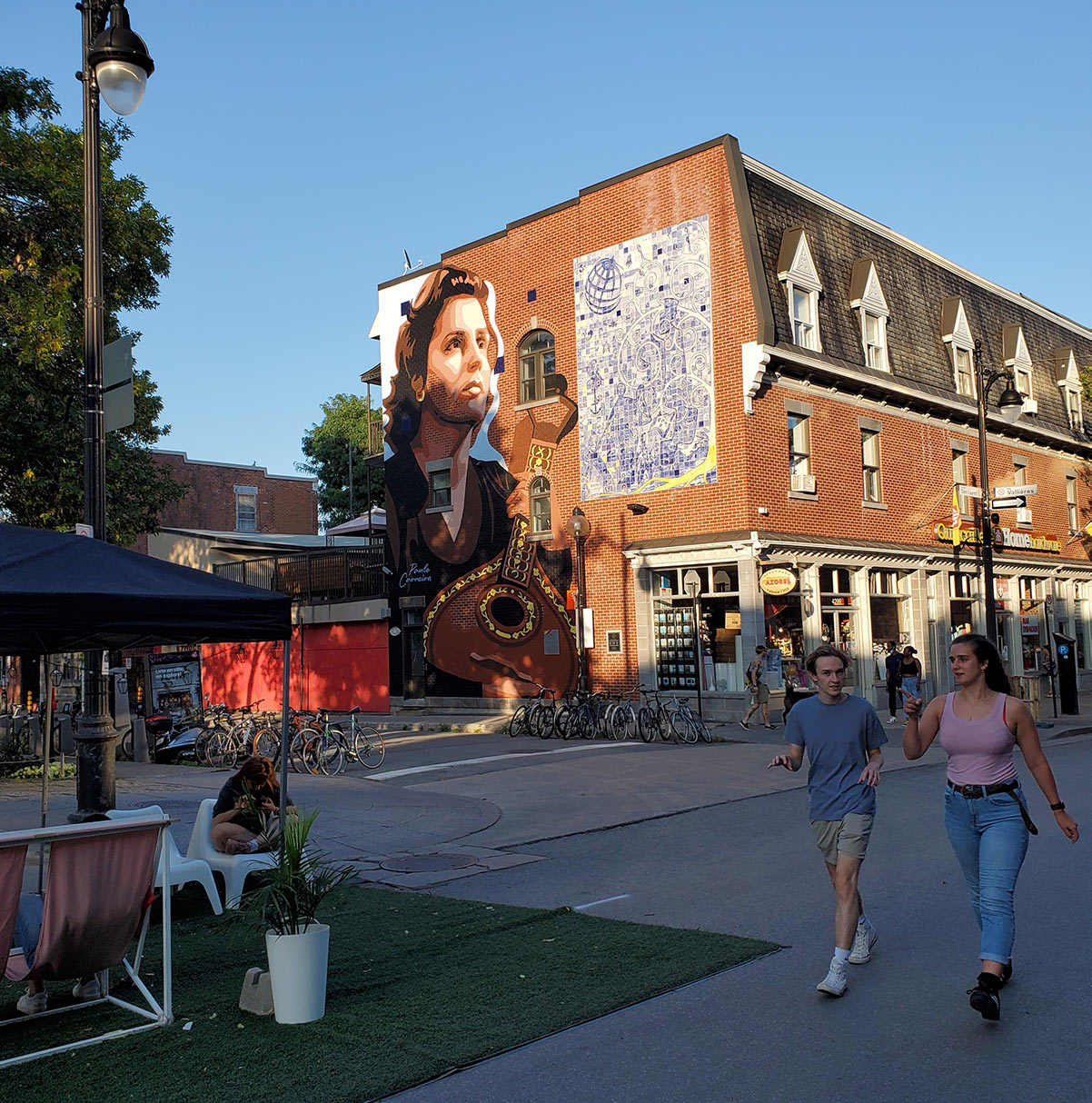
Neighborhoods of Montreal - Source: Personal Archive
I’ve visited provinces like Ontario and British Columbia and seen their large urban centers, as well as some suburbs and I could see up close how Quebec is different from them.
Read also: “Living in Montreal: 12 Points that you should consider before living in this city”
Not just because of the language, but, mainly, because of its architecture and urban life. So, to summarize this easily, I will list some positive and negative points when we buy Quebec from other provinces.
Positive points of Quebec in relation to other provinces in Canada:
- Education: The education system in Quebec has large centers of excellence, with universities of international prestige.
- Safety: Quebec is considered one of the safest provinces in Canada.
- History and culture: Unlike the rest of Canada, Quebec’s history and culture are marked by colonization and low diversity, which meant that the province suffered little influence from external immigrant cultures. They really preserve this, just look at how the historic architecture in the city stands out from the rest of Canada.
- Contact with nature: Quebec has many green areas and natural parks, in addition to having coastlines on the Atlantic and Arctic oceans, which offers many opportunities for outdoor activities, even with more intense winters. Quebec has a truly impressive diversity of landscapes.
- Cost of living: Quebec has a lower cost of living than other Canadian provinces, which can be an advantage for those looking to save money, even though it has one of the highest tax burdens in Canada.
- Mobility: With more than 500 km of cycle paths, just in the city of Montreal and a quality transport system, Quebec takes some points compared to other provinces in Canada.
- Iinfrastructure to deal with winter: The operation carried out by the province when it comes to removing snow is impressive.
Read also: “Best cities to live in the province of Quebec”### Negative points of Quebec in relation to other provinces in Canada:
- Traffic: In cities like Montreal, the level of car traffic is placing the city among one of the worst in Canada.
- Health System: This continues to be a problem that plagues the province. Poorly managed and always overloaded, Quebec’s healthcare system is not the best one would expect when compared to other provinces in Canada.
- Autocratic cultural policies: Quebec has very particular cultural policies that aim to preserve and promote French-speaking culture and this has left the province increasingly isolated from the rest of Canada. This story of wanting to force the French language at all costs has a negative impact on the province’s economy.
- Quality of roads and roads: With the second highest nominal GDP in Canada, it does not justify the province not taking better care of its urban roads, especially when we talk about Montreal. This corrupt side of the province is a very negative thing to see.
Bonuses
- Quebec is the second most populous province in Canada, after Ontario.
- The largest population concentration is in Quebec City, Montreal and near the Saint Lawrence River, which are considered very important urban areas for the country’s economy.
- Quebec is the largest province in Canada by land area.
- Quebec almost separated from Canada in two referendums on the province’s independence, in 1980 and 1995.
- Quebec funds education and learning programs to help foreigners qualify for jobs.
Final considerations
When choosing your destination to start your life in Canada, keep in mind that each province and city has its own particularities and, when it comes to Canada, this may surprise you.
My advice is to always tell people not to fall into this trap of doing your project without knowing in depth where you are going to live before immigrating, unless you really still believe that we live in igloos, surrounded by polar bears.
Read also: “8 things you should do on an exploratory trip to Canada before immigrating”
Quebec, like any other province in Canada, has its charms and disenchantments, you just need to find out if they suit your lifestyle. The only truth I can say at this moment is that, if you have reached this part of the text, make sure you are already doing your homework well.
If you want more tips like these, sign up for our newsletter to receive updates about life in Canada, especially in Quebec and Montreal.
See you in the next post! 😉

Marco Vasconcelos
Brazilian, webmaster, and e-commerce specialist living in Montreal since 2018. Founder of Você no Quebec, sharing practical guides, housing tips, and real-life experiences in the province to help Brazilian and international newcomers transition smoothly.
Read more about Marco →