Best cities to live in the province of Quebec
Survey methodology
This comparison was born from the article 8 golden tips for those who will live in Quebec, in which I explain the criteria I find most useful before choosing a city in the province.
Don’t treat order as a universal truth. An excellent city for a family with a car can be terrible for a student dependent on public transport. The evergreen valueof this guide is in the criteria and comparisons, not in a fixed position in the ranking.
I compiled public data and created a point system with nine criteria. I also include my personal impressions, because I have known several of these cities since I moved to Quebec in 2018. Where there are dated prices or indicators, use them as a historical reference and confirm the current number before deciding.
To limit the post size, I chose to talk about thecities with more than 100,000 inhabitants. The only exception is the city of Boucherville, which is slightly below this average, but has been growing a lot.
Unfortunately, there is no way to cover the more than a thousand cities (or municipalities) found in the province of Quebec, as some of them have a small population and do not have any appeal to immigrants. Thus, I focused only on the big and most sought after by those who will startlife in Quebec because of the facilities of the big city.
I will also maintain a radius of up to 300 km using Montreal as a reference center to list the cities, so some of them, such as Saguenay, are left out due to their great distance.
It is important to say that even if Montreal and Quebec City are not the focus of the post, you will need to include them in the list so that you can use them as a reference in your comparison.
Finally,to score each of the cities I used the following criteria:
- Cost of Living
- Career and Job Offer
- Quality of housing
- Child rearing
- Transportation, Mobility and Leisure
- Cleaning and conservation
- Crime rate
- Weather
- Level of isolation and integration
Province of Quebec in a few lines
The Quebec province population is at 8,575,779 inhabitants, being the second most populous province of theCanada. Its total area of 1,365,128 km² also makes it the largest province. Within this area are about 1,107 municipalities distributed in 17 administrative regions of Quebec. Each presenting a distinct economic profile and a particular quality of life. For this post I will use 4 or 5 regions at most.
Overall, the cost of living in Quebec remains a major draw for those choosing this province. And even though somequebec’s negatives make it a questionable choice for immigration to Canada, many like me, fall in love with life in “La Belle Province”.
I made a list of important posts about Quebec in case you don’t know much about the province:
- 5 major cultural differences between Quebec and other provinces of Canada
- Know 17 laws in Quebec wellstrangers for newcomers
- Quebec for Newcomers Brazilians: Tips on Local Culture
What are the best cities in Quebec to live in?
Well, now that we have established the necessary criteria to put together this list, let’s go to the best cities to live in Quebec.
1. Trois-Rivières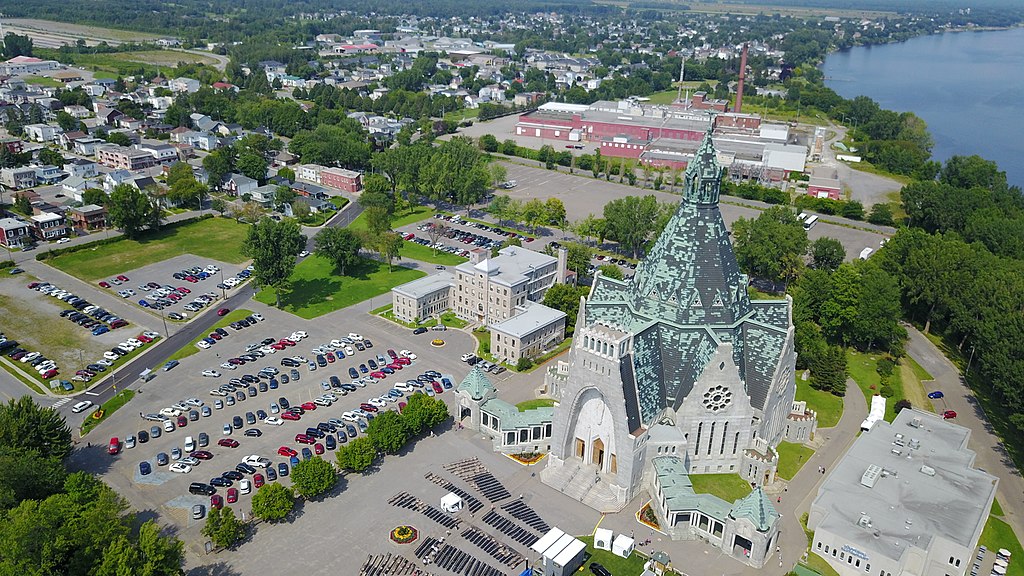
Notre Dame du Cap Basilica de Trois-Rivieres - Source: Wikimedia Commons
Trois-Rivières is a city with almost 400 years of history, one of the oldest in the province. It has a very rich cultural experience, economic dynamism, low cost and high standard of living, as well as beautiful outdoor landscapes.
| Trois-Rivières population | 134.413 inhabitants |
|---|---|
| Trois-Rivières total area | 464.6/km ² |
Here are some advantages of living in Trois-Rivières:
Cost of Living: Trois-Rivières has a relatively affordable cost of living compared to other cities in the region. The average rental value of a two-bedroom apartment is around CAD 1500 to CAD 2000 per month, depending on the location and amenities offered. As it is a relatively large urban center, the supply of supermarkets and stores is large, making the cost of food and services more competitive.
Career and Job Offer: Trois-Rivières is an economic center of the Mauricie region, which offers numerous opportunities for employment and economic development, being among the five most important cities in Quebec in terms of turnover.
Quality of housing: Due to the city’s founding age and its low growth in the last 20 years, there is not a very large supply of new construction, even if the scenario has changed a little after the pandemic with many Montrealers migrating from Montreal to smaller cities. So, be ready to live in very old real estate. A positive point in this regard is that due to low demand (for now), the sale price of real estate is relatively low compared to other regions of Quebec.
Transportation, Mobility, and Leisure: Public transportation is also quite affordable, with a monthly pass costing around CAD 86. There are options like bus and train lines, but this one can be a city where going without a car might not be an option. Its proximity to Montreal International Airport (about 2 hours by car) makes it a viable option for those who need to travel frequently. The leisure offer is reasonable, but don’t expect too much. You can check out the official local tourism website to check it out.
Cleaning and conservation: As this is a medium-sized city, I would say that cleanliness and maintenance is in the middle. Some points very clean, but others very loose. In general, everything that is on the banks of the rivers is always very beautiful and tidy. I didn’t see as much trash on the streets as I usually do in Montreal.
** Crime rate **: According to the Numbeo website, Trois-Rivières is considered a very safe city due to its low crime rate: 9.62 (42% lower than the national rate).
** Isolation level:** The city is very well situated as it is just over 1 hour from Quebec and 2 hours from Montreal. As demographic density is always a factor in this aspect, Trois-Rivières is in the middle, with a reasonable population of immigrants, including many Brazilians.
Climate: The most intense thermal sensation of cold is usually something common in the city, as it is cut by three rivers. Being near rivers in Quebec during the winter has a thermal higher cost due to cold air currents that are carried from the Arctic through the Saint Laurent River.
 Reasons to live in Trois-Rivières Reasons to live in Trois-RivièresStrong points: Location, low crime, employment and education opportunities, low isolation and communities. Negative Points: Quality of housing, climate, mobility and infrastructure. My personal impressions: I found the city a little poorly cared for and with few leisure activities for my lifestyle, but I may be mistaken, as I did not get to know it in depth. I'd even live in it if I had a very tempting job offer. My overall rating would be a 6/10. |
2. Montreal
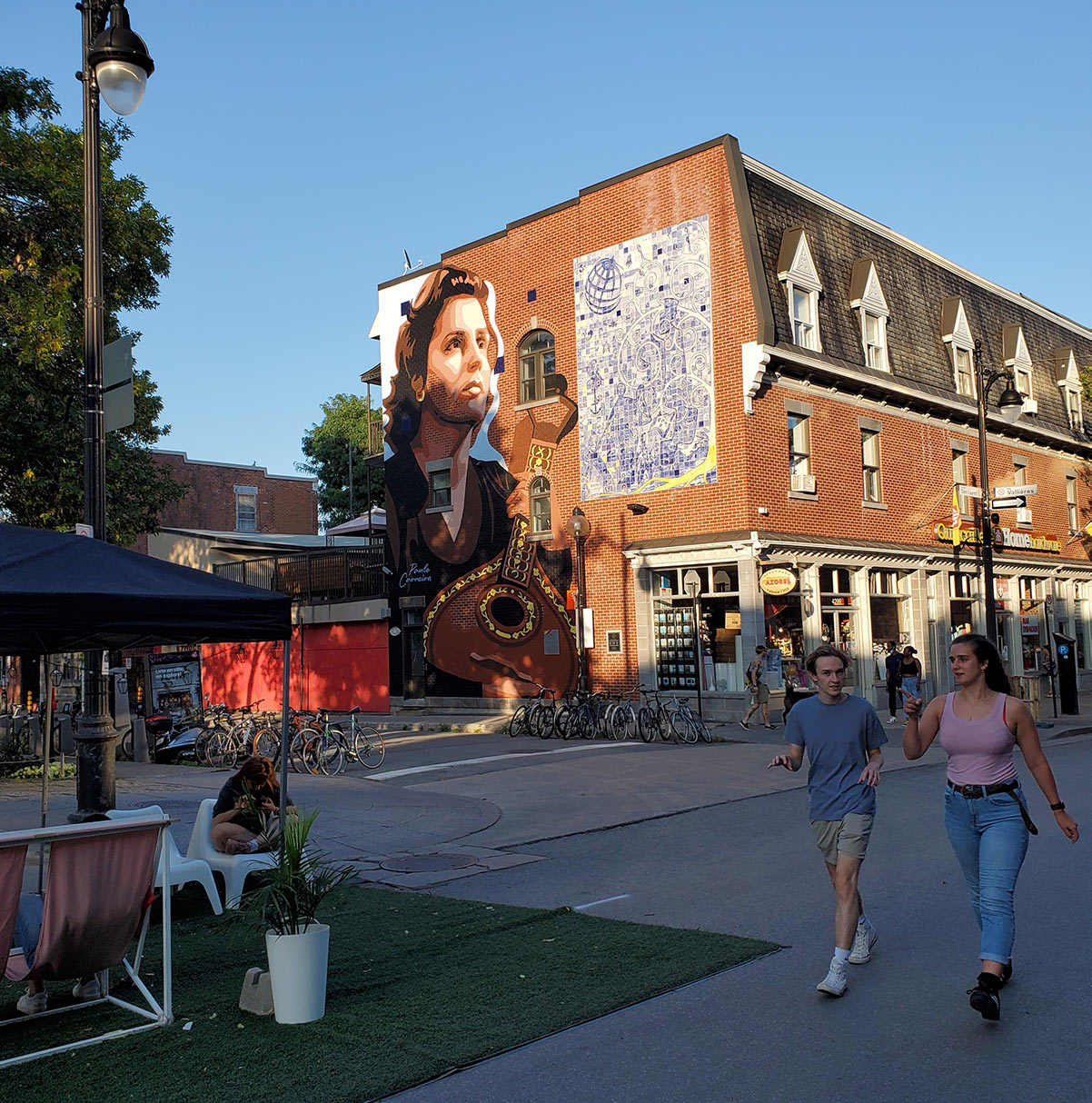 Montreal Neighborhoods - Personal Archive Source
As Canada’s second largest city, Montreal attracts large numbers of immigrants each year to live and work in the area. The Greater Montreal Area is home to more than 4 million people, which includes nearly half the population of the province of Quebec. Immigrants make up more than 34% of Montreal’s total population. The city is represented by 120 different cultural communities with origins in each of the continents of the world. As I have lived in it since 2020, I may be biased, so I will try to be as neutral as possible.
| Population of Montreal | 1.78 million inhabitants |
|---|---|
| Total area of Montreal | 365.65 km² |
Here are some advantages of living in Montreal:
Cost of Living: The estimated monthly cost for a single person in Montreal is CA$3,085, while for a family of four it is CA$5,911. The cost of housing is one of the main factors influencing the overall cost of living in Montreal, but rental prices are still more affordable than in other Canadian cities. Being a great shopping centre also makes Montreal very accessible due to the wide range of products and services. Overall, the cost of living in Montreal can be considered moderate compared to other major cities in the world, but it is by far the highest compared to other cities in Quebec.
Career and Job Offer: Montreal is the economic capital of Quebec, home to major international corporations and some of Canada’s most important industries. Although manufacturing remains an important sector for the city’s economy, it is being overtaken by the rapid growth of advanced technology sectors. Aerospace, Life Sciences, and Information Technology are all major employers in the Montreal area. Montreal’s advanced industries are fast becoming world leaders in their fields. Thus, being unemployed in Montreal will be the least of your worries. However, the high cost of living can be a problem, since wages are usually higher in the city, which is why so many want to live in it, causing the price of real estate to rise.
Quality of housing: In Montreal you will find real estate for all pockets, but be aware that the demand for housing in the city is stupid, pushing the rent value beyond your budget very easily, especially if you are looking for better-quality properties quality, such as new construction. As explained in my other article, heritage listing and environmental zoning laws make the city a difficult place to expand in terms of real estate growth.
Raising children: Despite the big city aspect, there are many neighborhoods in Montreal where you can find the same quiet of smaller cities, just don’t think you will pay a premium to live in them. The supply of daycare centers and schools is huge, but due to the demographic density of the city, you will also suffer from competition from other countries. The city offers dozens of leisure options and cultural activities for children of all ages, so there is no competitor to match in this regard.Transportation, Mobility and Leisure: Public transportation is one of the most comprehensive in Canada, if not the best in terms of coverage. The value of passes will vary greatly depending on how and for which you need to take off. Its coverage includes dozens of bus, train, 4 underground and one surface subway lines, in addition to river transport and an international airport. I also have to say that it is the mecca of the cyclists, with its more than 500 km of bike lanes. Once again, there is no real competitor in this regard, unless you are extremely dependent on the car, as traffic is a real hell. As for leisure, I would need a whole post just to talk about this topic, so let’s imply that in this matter the city is a gold medalist.
Also read: “How to use public transportation in Montreal”
Cleanliness and maintenance: If you expect Montreal to be spotless everywhere, you may be disappointed. Cleanliness varies noticeably from one neighborhood to another, and litter, aging infrastructure, and rough pavement remain recurring complaints. At the same time, many residential areas are exceptionally well maintained. One operation the city handles particularly well is snow and ice removal, an essential service that becomes obvious after the first major storm.
** Crime rate **: Montreal is considered a safe city due to its low crime rate, but you need to do a parenthesis here. As it is a huge city, some of its regions can be considered more complicated than others due to a greater concentration of immigrants in an unfavorable social situation, such as the North and East regions of the island. In this regard, the city drops some positions, but it is still far from unsafe by international standards.
Also read: “Montreal is voted the safest city in Canada and is in the Top 3 in the world”
** Insulation level:** With about 34% of its population made up of immigrants, you are unlikely to feel isolated in Montreal. Even our community of Brazilians has been growing strongly in recent years. When I arrived in Quebec in 2018, I could barely hear people speaking Portuguese on the streets, today, this has already become commonplace. Again, point to Montreal in this regard.
Weather: The cold usually affects you more if you live in wider neighborhoods and without so much access to the subway or conveniences such as large shopping malls. Like every big city in Canada, having a large infrastructure in your favor has many benefits, even during the winter. Montreal’s snow and ice removal operation is considered one of the best and most efficient in the world. When compared to other Quebec cities, Montreal does better in this regard, but you should also consider that the air quality is not the best.
Also read: “Is Canada better prepared for the intense cold than the US?”
| Reasons to live in Montreal Strong points: Location, employment and education opportunities, low isolation, mobility and leisure. Negative points: Higher crime in some areas, inconsistent cleanliness, traffic, and housing costs. My personal impressions: As I said, I may be biased, as I love living in this city for its dynamism and energy. In my opinion, Montreal manages to be the perfect combination of history, local traditions, and multiculturalism, even in the midst of a bit of big-city chaos. My overall grade would be a 10/10 were it not for the cost of living. |
3. Quebec City
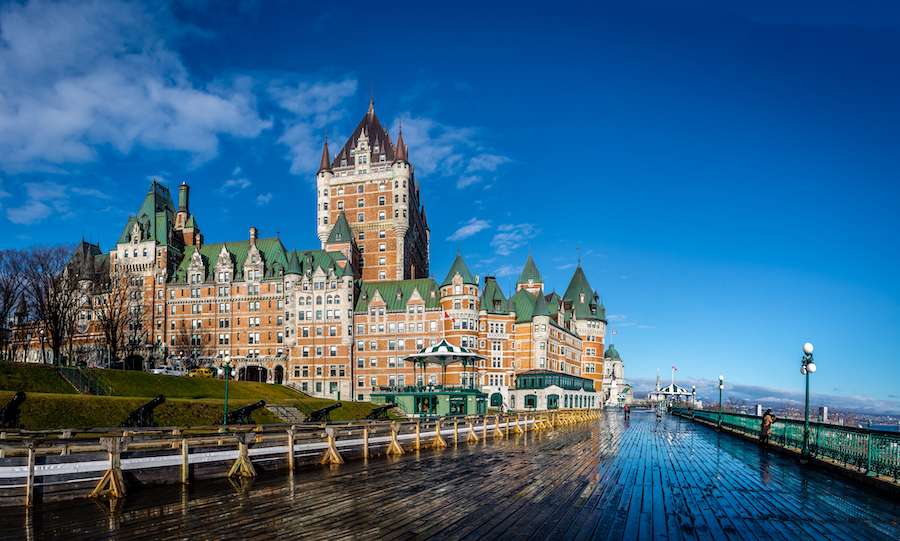
Frontenac Castle Hotel Ville de Quebec - Source: Stock Photo
The city of Quebec is the capital of the Canadian province of Quebec and is known for its historic architecture and French charm. Founded in 1608 by Samuel de Champlain, Quebec is one of the oldest cities in North America. It is divided into two parts: the upper town, home to Château Frontenac, one of the city’s most famous landmarks, and the lower town, home to Place Royale, a historic square dating back to the early 17th century. Quebec is a popular tourist city with many attractions, including the Quebec Carnival, one of the largest winter festivals in the world.
| Population of Quebec | 542.298 inhabitants |
|---|---|
| Total area of Quebec | 485.77 km2 |
Here are some advantages of living in Quebec:
Cost of Living: The cost of living in Quebec City is relatively low compared to other major North American cities. In this regard, Quebec City’s rent burden is clearly lower when compared to Montreal, but it is not the lowest among other cities in the province. Generally speaking, rentals in Quebec are still more affordable, but this is a changing reality. There is also a large supply of stores and services, making the cost of food also balanced.
Career and Job Offer: As the second most important city in the province, Quebec also offers many jobs with wages equivalent to the local cost of living. There are dozens of large companies in place and a rich service sector that still suffers from labor shortages. Like her wealthy cousin (Montreal), finding opportunities for her career won’t be the biggest of her challenges when choosing this city to settle down in.
Quality of housing: Like Montreal, Quebec also shares some housing problems. On the one hand, neighborhoods where the depletion of buildings has already reached the limit, on the other, urban and forest zoning. Still, Quebec has plenty of room to grow, unlike Montreal. Finding new real estate is not easy, proving that this situation remains a reality in almost the entire province.
Raising children: Here is a 10/10 city in terms of children and family. The combination of high-quality public services, immense parks and impeccable school infrastructure, make Quebec a sure destination for those who do not want to warm up to this topic. There really is nothing to say in this regard, even for those who think about the long term at university for their children.Transportation, Mobility, and Leisure: Public transportation in Quebec is limited to bus and train lines, and in some cases, river lines. Quebec is also served by an airport for domestic flights, so you don’t necessarily have to rely on Montreal for everything. Bike lanes abound and there is very little talk about traffic in the city, but living without a car can be tricky. I would say the mobility quality of the city takes a 7/10. Leisure in Quebec is one of the highlights of the city, which receives thousands of tourists all at practically all times of the year, a score of 10/10 in this regard.
Cleaning and conservation: Undoubtedly 10/10. I saw few places (more in the historical and tourist center) where cleaning and conservation is below average. Other than that, the city is very clean and well maintained.
** Crime rate **: Just like * * Trois-Rivières * *, Quebec is also at the top of the list when it comes to security. In this regard, the city shares the podium with a few, even though it is the second largest in demographic density in the province.
** Isolation level:** Despite a high demographic density, Quebec does not reach a territory dominated by immigrants, but this has been changing due to integration policies proposed by the provincial government. You will notice that English is limited to tourist areas of the city and, that the predominance of white and blonde people is considerably higher when compared to Montreal. The community of Brazilians in Quebec is quite large, including many local entrepreneurs. A breath for those who miss their green and yellow countrymen.
Weather: This is where the bug picks up. Further north, higher, and closer to the icy Arctic currents coming through St. Lawrence River, Quebec City is not what we might call the climate of winter dreams. It is 3 to 4 degrees colder than Montreal and it snows a lot, but a lot. Yeah… I know, it was too good to be true only 10/10 in almost everything. But it’s like this, you can’t have everything, right?
Also read: “Is Canada better prepared for the bitter cold than the US?”
| Reasons to live in the city Quebec Strong points: Location, moderate cost of living, employment and education opportunities, low level of crime, leisure and mobility. Negative points: Climate and housing quality. My personal impressions: This would be my first choice, if not for the weather. The city is very beautiful and very reminiscent of some parts of Europe, full of life with its great festivals. Not to mention its natural beauties, a chapter apart. My rating for Quebec City is undoubtedly 8/10. |
4. Laval
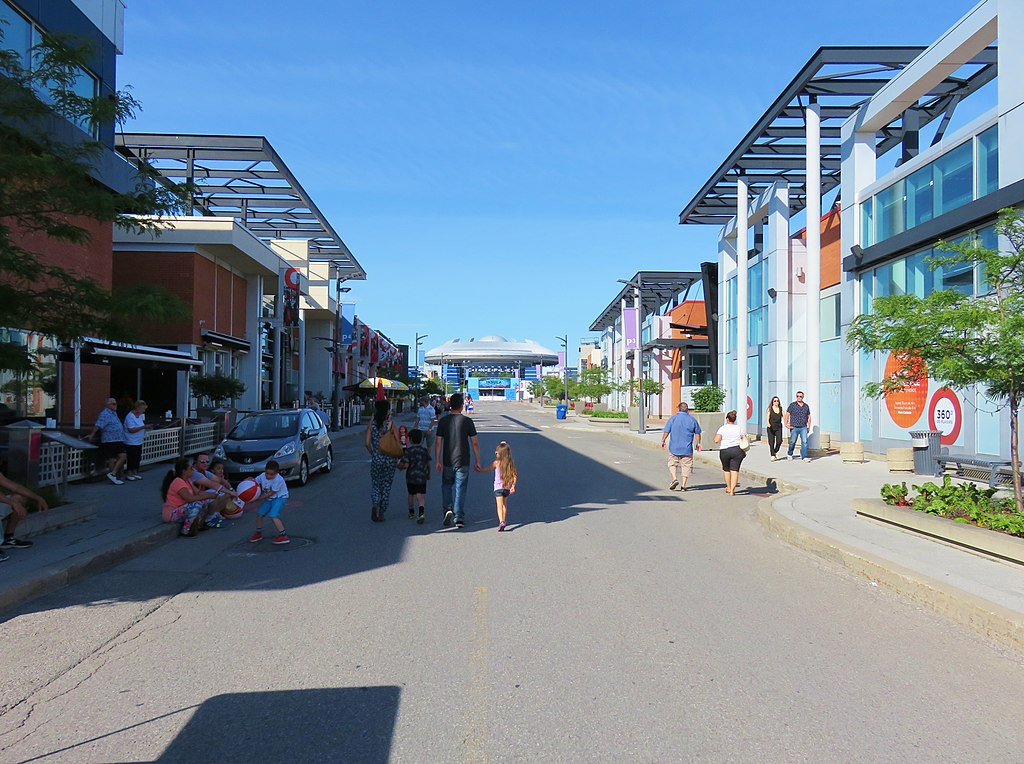
Promenade du Centropolis, Laval, Québec - Source: Wikimedia Commons
The city of Laval was officially incorporated in 1965 and became an administrative region in 1987, forming part of the Greater Montreal (Metropolitan Region). The city is one of the most important in Quebec from an economic and demographic point of view. Laval is an important urban centre with a diverse industrial infrastructure. More than a third of the city’s territory is located in the agricultural area (in the eastern part of the island). In addition, the Rivière des Mille Îles that runs through it has about thirty islands covered with forests and swamps.
| Laval | 437.413 inhabitants |
|---|---|
| Total area of Laval | 246 km² |
Cost of Living: The cost of living in the city of Laval varies greatly depending on how close you are to the only three metro stations that connect Montreal to the city and also to the region where you intend to live. As in all the cities I mentioned, the newer the property, the more expensive your rental bill will be. Still, you can find better prices than in your neighbor Montreal, making the cost of housing relatively lower. In it, you will also find a huge offer of shops and services, making the cost of living a little more affordable.
Career and Job Offer: As an industrial hub and headquarters of many companies in Quebec, it is not a great challenge to find employment in Laval, however, the city is far from being comparable to Montreal in terms of the number of positions offered and the variety of available positions. In fact, due to its proximity to Montreal, Laval ends up becoming a dormitory city for some sectors, as Montreal employers accept to hire employees domiciled in Laval.
Quality of housing: In this regard, Laval takes some extra points in relation to its neighbor Montreal, as it has a lot of space to build and more flexible zoning rules. Thus, it is common to see in Laval large condominiums of buildings with more than 10 floors (a rare thing in Quebec), contrasting with older neighborhoods in a quieter, more suburban character.
Raising children: Raising children in Laval will depend on two major aspects, the first in relation to the location of schools and the second in relation to the neighborhood. I have already explained this in other articles, but I will say it one more time. The quality of the school can even be good in some cases, with good teachers and infrastructure, but if the attendance is not, forget the neighborhood. I lived my first year in Laval in a neighborhood where the school had poor attendance, as a result, I moved to Montreal the following year. It is worth mentioning that this rule is the same for all Canada.
Also read: “How does the school system work in Quebec?”
Transportation, Mobility and Leisure: Laval is so large that it has its own transport management, which has bus, train and 3 metro lines that connect a small part of the city to the center of Montreal. This gap in the subway lines makes Laval a city with a level of partial mobility, as only a few neighborhoods have the privilege of this convenience. Bike lanes also take a back seat in the city. Anyone who has been to Orlando, Florida, will find some similarities with Laval due to its wide avenues and very deserted spaces. This is a city where living without a car can be a problem, especially in winter. As for leisure in Laval, you will identify with the city if you like large concrete spaces such as cinemas, shopping malls, stadiums and concert halls, as well as indoor attractions for children. Don’t expect to see as many cool parks as in Montreal. There are even a reasonable number of events and festivals in the city for those who don’t want to cross the bridge to Montreal, but the atmosphere is generally more family-oriented.
Cleanliness and maintenance: Laval varies considerably by neighborhood. Some areas are orderly and well maintained, while others show the same litter and infrastructure problems seen in Montreal. Snow clearing can also feel slower than on the island. Crime rate: Local reporting has drawn attention to crime in some sectors, but the overall context is still very different from the insecurity found in major Brazilian cities. Laval has many quiet, well-structured neighborhoods, so citywide rankings should not replace research into the specific area where you plan to live.
Level of isolation: Laval’s large immigrant population makes integration easier than in many smaller Quebec cities, although the experience varies by neighborhood. Chomedey, for example, is exceptionally multicultural, and receiving service in Arabic or English is common in local businesses. The Brazilian community of Laval is also well established, so newcomers do not necessarily have to begin without a support network.
Climate: Only slightly colder than Montreal for those living in the north of the island, but nothing very significant. The fact that the city has very wide avenues in and large regions of industrial zone makes the detachment during the winter very dependent on the car, as the freezing wind is deadly in some parts of the city.
| Reasons to live in Laval Strong points: Location, cost of living slightly lower than Montreal, employment, leisure and mobility opportunities. Negative points: Crime rate and quality of schools. My personal impressions: As I said, I lived in Laval in my first year of Quebec and I could see up close the advantages and disadvantages of the city. If you can combine proximity on the subway and good schools for your children, this city can be a great option for young families looking for peace and quiet. Outside of that spectrum, I would say Laval figures on that list as a dormitory city in my opinion. My note to her is a 6/10. |
4. Boucherville
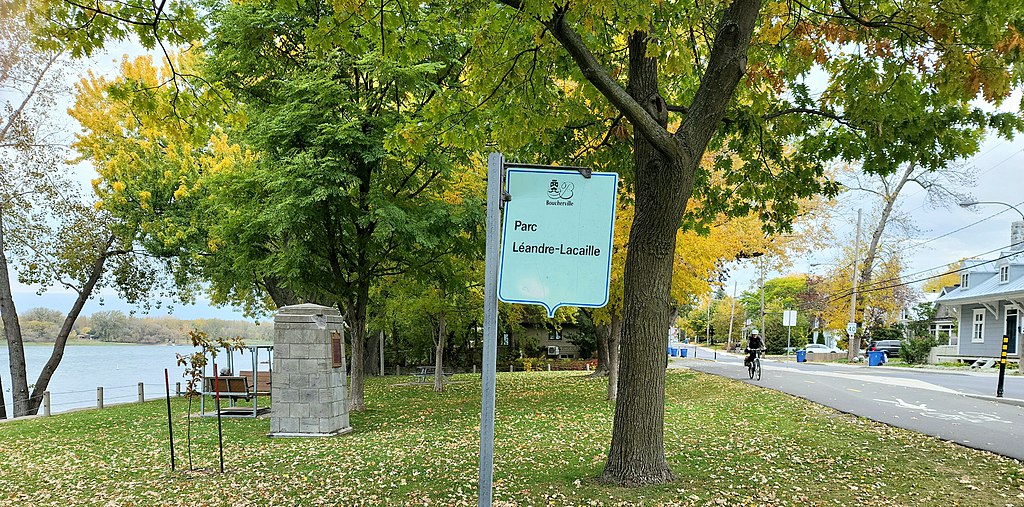
Boucherville (QC) Parc Léandre Lacaille - Source: Wikimedia Commons
One of the oldest cities in Quebec, Boucherville was founded by Pierre Boucher in 1667. Its distinctive heritage events and attractions are situated along the shore of the Saint-Laurent River. Boucherville is just 15 minutes from Montreal and delights newcomers with its numerous pedestrian and cycling paths offering a panoramic view of the beautiful Boucherville Islands.
| Boucherville Population | 42.730 inhabitants |
|---|---|
| Total Boucherville Area | 70.80 km² |
Here are some advantages of living in Boucherville:
Cost of Living: Living in Boucherville was much more affordable before the pandemic, but the landscape has changed dramatically in recent years. It is another dormitory city, although one has a large shopping center and some industrial activity. The city has become the target of Quebec’s high income seeking a smaller city with a better quality of life. This has caused the price of real estate to explode, even in older homes, making the cost of living in the city the biggest obstacle for newcomers. On the other hand, this is a city with a reasonable supply of commerce and services in relation to the number of inhabitants, so finding promotions is not a challenge.
Career and Job Offers: The unemployment rate in Boucherville is 4% as of the last census, which makes it one of the lowest in Quebec. Boucherville’s economy is self-sustaining, with companies such as Costco, Ikea, Roma and Uni-Select located there, but there is no doubt that with an average family income of CAD 129,737 per year, many of its skilled workers work in large companies in Montreal, while the city’s population has a high level of education when compared to other cities, further reinforcing the idea that we are talking about a Quebec dormitory city.
Quality of housing: Despite age, Boucherville was one of the few cities in Quebec where high-end real estate investment has evolved the most, so it is common to see new homes and condominiums amid homes that are more than 100 years old (some very well maintained). But this higher level in the standard of construction brings with it a price to pay, often uninviting to newcomers.
Raising children: Like every city where income is high, Boucherville is what we can call it the ideal place to raise children. In addition to good schools, the city maintains that atmosphere of a luxury condominium in Brazil where its next-door neighbor keeps an eye on all the children on the street and reacts at the slightest sign of something suspicious. In this city you see many children aged 3, 4 and 5 walking to school without much ceremony. You’ll also notice that its inhabitants speak well above average English by the standards of smaller cities in Quebec.
Transportation, Mobility and Leisure: You live well with public transportation in Boucherville, but don’t expect too much from it regarding frequency and integration. You’ll be dependent on the metro station in the nearby town of Longueuil (about a 15-minute coach ride from central Boucherville). Bike paths are a separate chapter (10/10), but living without a car in the city will not make your life easier unless you live very close to the commercial centers. Those who intend to go regularly to Montreal should be prepared to face good hours of traffic to cross the points that connect the city to the center during the rush. And don’t fall for the fact that it’s only 15 minutes from downtown, that’s bullshit. Leisure in Boucherville is also another strength, but it is limited to activities during the summer. Other than that, there are good restaurants and a few cool bars. The atmosphere is distinctly suburban.
Cleaning and conservation: Boucherville is a few cities in Quebec with a significant demographic concentration for its size where cleaning and conservation receives an AAA++ seal. I regularly go to the city, as I have many friends there, and I do not remember seeing garbage or clutter on the streets in the last 4 years when I visited the city. For me, both infrastructure and historical and natural preservation are impeccable. I think she gets an easy 12/10.
** Crime rate : Another 10/10, you don’t have to worry about safety because your crime rate is 43% lower than the Quebec average and 66% lower than the national average. You know that story about leaving your expensive bike on your doorstep and no one touching it for days? Yeah, that’s Boucherville. Isolation level:** Like Quebec City, Boucherville is not what we might call an immigrant stronghold. The combination of high income and city with inland style makes hers a meeting point for the well-born natives of the province. Among the strongest communities I could observe are Latinos (very present in Montreal as well). Hearing Portuguese on the streets of Boucherville will not be as common as in other cities, so, you need to make an effort to integrate more into it. During the winter, the limitation of transportation options and activities makes the city a place for those seeking isolation, a good sofa and Netflix. If you’re not that kind of person, rethink Boucherville.
Weather: There’s nothing to say about the weather, as the city is very close to Montreal, so you can use it as a reference. During the winter the cold will get you anyway.
| Reasons to live in Boucherville Strengths: Cleaning and conservation, very low crime rate and quality of the city's schools and infrastructure. Negative Points: Housing and isolation. My personal impressions: There were times in our life here in Quebec that we considered living in Boucherville, but the isolation in winter made us rethink the case. The city is beautiful and very pleasant, but this is a face of it that we only see outside the coldest months. The crime rate for me is somewhat unimportant by my standards after living for over 40 years in Brazil, so what attracted me most in the city was a cleanliness and conservation, in addition to contact with nature. The Rive-Sud of Montreal has many charms, if you are looking for peace, quality of life and can afford the higher cost of living when you arrive, this city is for you. My rating is 8/10. |
What other cities can I expect in this post?
Soon, I’ll be talking about Sherbrooke, Gatineau and Longueuil.
Which city should I choose to live in Quebec?
When choosing your destination to start life in Quebec keep in mind that each city has its particularities and this can really surprise you. I took an exploratory trip through 4 Canadian cities in 2017 as a tourist, definitely immigrated to Quebec in 2018 with destinationthe city of Laval and I have lived in Montreal since 2020. I can say that even though I really enjoy living in Montreal, it is likely to be my final destination in the province for years to come.
With every new city I discover in the province I see how wrong my idea of Canada was while I was in Brazil. Living in a country where immigrants arrive all means seeing the city change its scenery much faster than it is used to in Brazil. Montreal does notit’s more the same city I met in 2017, as well as all the ones I mentioned. As population growth moves in Canada, it is likely that everything I have written about them in this article will no longer be the same reality next year.
Also read: “Canada’s population has just surpassed 40 million and sets a new record”
Definitely, thethe best city for you to live in Quebec will be the one that will best serve your purposes, lifestyle and pocketbook, since the only certainty I can give to future residents of Quebec is that, with the current housing crisis facing the country, immigrants of the new generation will have a much harder time settling in, regardless of the city they choose.
As I said at the beginning, this post will continue to grow as I add more reviews of the best cities to live in Quebec. If you want more tips like these, sign up for our newsletter to receive updates about life in Canada, especially in Quebec and Montreal.
See you in the next post! 😉

Marco Vasconcelos
Brazilian, webmaster, and e-commerce specialist living in Montreal since 2018. Founder of Você no Quebec, sharing practical guides, housing tips, and real-life experiences in the province to help Brazilian and international newcomers transition smoothly.
Read more about Marco →