

A Brief History of Canada's Immigration Policy
Immigration Policy in Canada
Over the last fifty years, Canada has built a solid reputation as a welcoming country for immigrants, promoting multiculturalism. With almost a quarter of its population born abroad - the largest proportion in over 150 years and one of the highest among Western industrialized nations - immigrants have played a crucial role in fighting demographic aging and stimulating economic growth.
However, this trend has also generated concerns among some Canadians about the growing pressure on housing and social services.
Over the past ten years, Canada has become even more attractive to immigrants, especially after the implementation of restrictive policies in the United States during President Donald Trump’s administration.
Although President Joe Biden has largely reversed these policies, his administration has worked together with Canada to control the flow of refugees and asylum seekers crossing the northern U.S. border into Canada.
In parallel, Canada faces a prolonged labor shortage, worsened by a lack of skilled workers. In addition, its immigration system faces several challenges, such as an increase in asylum requests, a rise in deportations, and labor abuses against temporary visa holders.
What has been the historical role of immigration policy in Canada?
Just as in the United States, immigration has played a crucial role in shaping Canadian society and culture. After gaining independence from the United Kingdom in 1867, Canada turned to immigration to help develop vast areas of land. Government campaigns and recruiters encouraged immigrants of the time to settle in rural and frontier areas.
However, not all immigrants were welcomed with open arms. Policies from the 19th and early 20th centuries restricted or discouraged the immigration of certain groups, including people of non-European or non-Christian origins, as well as the poor, sick, and disabled.
The scenario changed in the post-war period, with an influx of refugees from Europe, greater public acceptance of foreigners, and the demand for a more robust workforce due to economic growth. Cold War tensions also influenced immigration policy, with preferences established for anti-communist immigrants and those from the Soviet bloc.
Legislation from the 1960s and 1970s laid the foundation for Canada’s current immigration regime, which promotes multiculturalism. In 1967, the government introduced a points system to evaluate applicants, resulting in a significant increase in immigration from Africa, Asia, Latin America, and the Caribbean.
A 1971 policy formalized the government’s support for cultural diversity, while 1976 legislation expressed Canada’s commitment to refugees, requiring cooperation between federal and provincial authorities in setting immigration targets. These laws also established immigration as a tool for achieving cultural, economic, and social goals.
Immigration has been fundamental to the Canadian economy, providing a stream of relatively young workers. With the native population aging and the fertility rate remaining low, at around 1.3 births per woman - well below the global average of 2.4 - immigrants have become even more essential. Despite this, Canada faces a persistent shortage of skilled labor across all industries, although this problem eased in mid-2023.
What is the perception of Canadian citizens regarding Canada’s immigration policy?
For decades, the Canadian public has maintained a favorable view of immigration, although in recent years there has been a slight decline as migration levels have increased, raising concerns about affordability and housing.
Read also: “How much does it cost to live in Canada in 2024?”
According to a 2023 survey by the Environics Institute, based in Toronto, 44% of Canadians felt there was an excessive amount of immigration to Canada, an increase from the 27% recorded the previous year.
However, overall, Canadians continue to view immigrants and their country’s immigration system more positively than their peers in the United States. This is partly due to the Canadian government’s efforts to promote and adopt a policy of multiculturalism, integrating diversity into the national identity.
Furthermore, Canada does not face the problem of large-scale unauthorized migration, a challenge that has fueled backlash against immigration in many other countries, including the United States. However, some polls suggest that public support for immigration can easily decline, as seen during the COVID-19 pandemic.
Read also: “Canada immigration will limit the population of temporary residents over the next three years”
Who migrates to Canada and where do they settle?
In 2022, Canada granted permanent residency to over 437,000 foreigners. (Preliminary data for 2023 indicates this number surpassed 471,000, the largest number of new foreign residents accepted in a single year.)
Read also: “Canada’s population just passed 40 million and set a new record”
The majority of new Canadian permanent residents in 2022 originated from India, followed by China, Afghanistan, Nigeria, and the Philippines. The current government plans to continue gradually increasing immigration levels, aiming to accept five hundred thousand new permanent residents per year by 2025, when Ottawa intends to stabilize immigration targets.
Where do Canada’s immigrants come from?
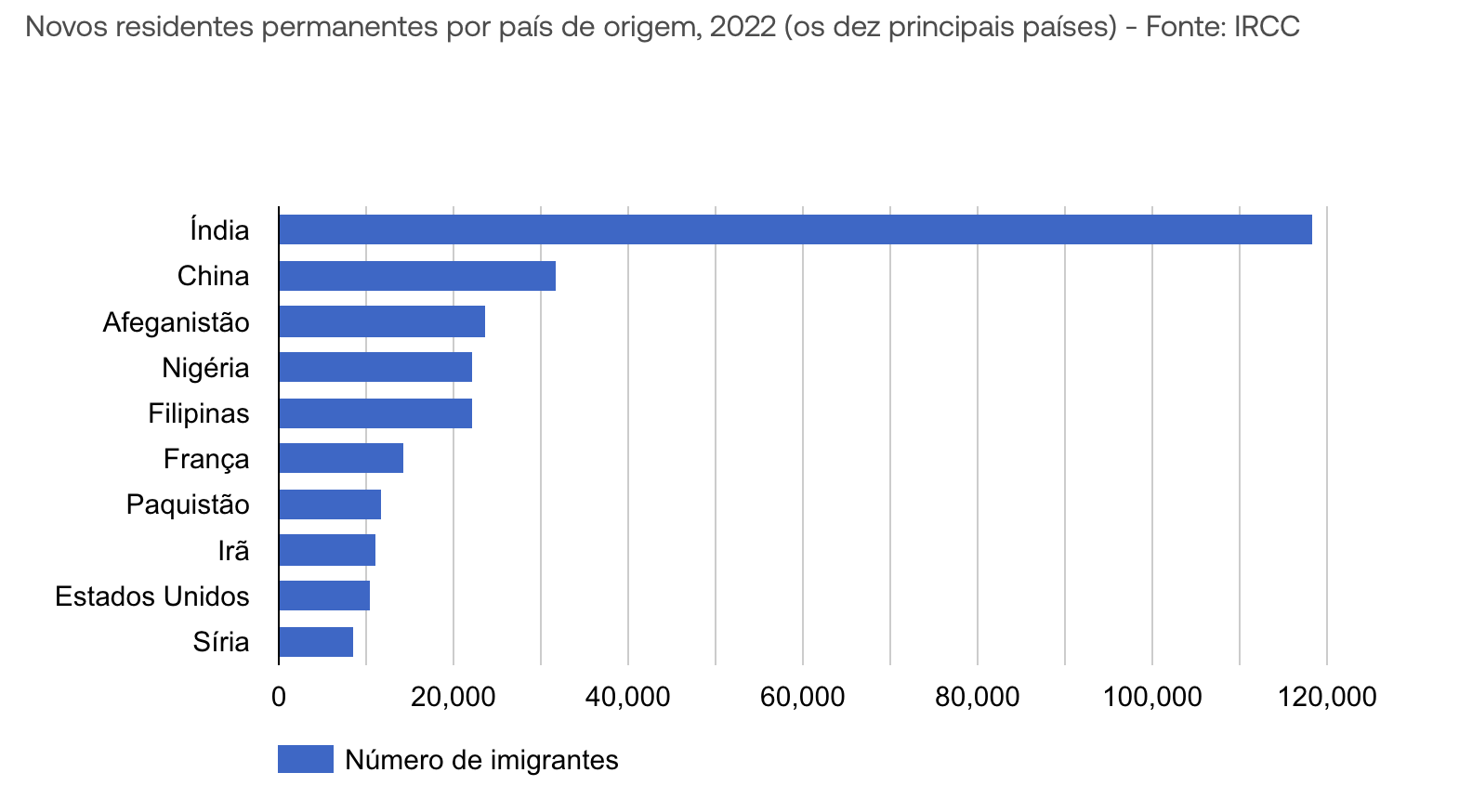
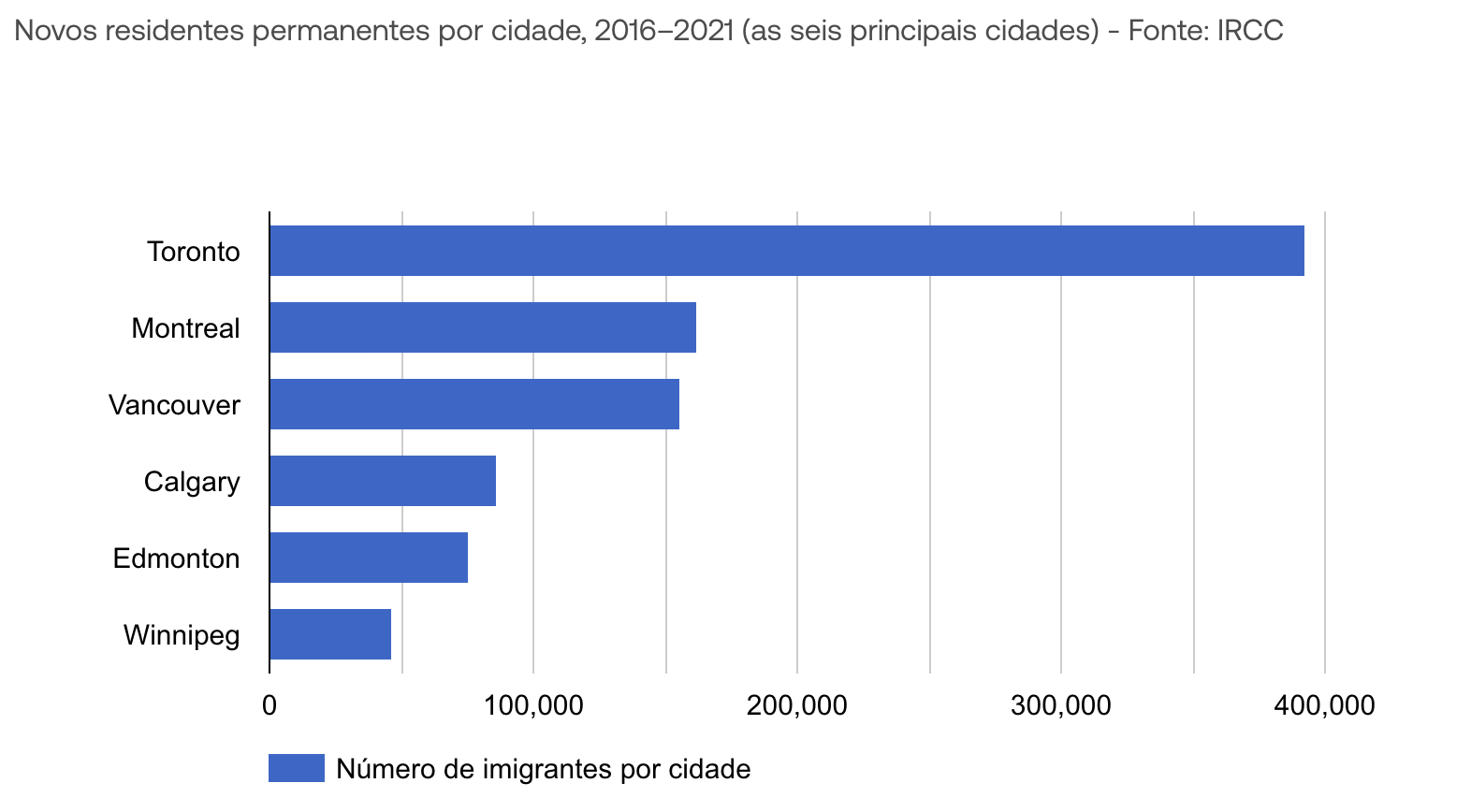
Ontario has been the top destination for immigrants. Between 2016 and 2021, the province received 44% of all new permanent residents, most of whom settled in and around Toronto, Canada’s largest city.
Where do immigrants settle in Canada?
Read also: “Living in Montreal: 12 points you should consider before moving to this city”
How does the immigration process work in Canada?
Canada welcomes new permanent residents through four main categories. In 2022, 58% of immigrants were admitted through economic pathways, 22% through family sponsorship, 17% as refugees and protected persons, and 2% on humanitarian or other grounds.
Via Economic Immigration:
Canada’s economic immigration process is considered a model for other countries. The federal government offers several economic programs, mostly managed through a points management system known as Express Entry.
This system prioritizes younger candidates with job offers and high levels of education, experience, and language proficiency in English and French.
Approximately every two weeks, the government invites qualified individuals to apply for permanent residency, a comprehensive process that includes language tests and biometric screening.
The majority of candidates receive a decision within six months. Due to changes during the pandemic, the Express Entry program now accepts migrants with a minimum score of sixty-seven, down from the previous mark of seventy-five.
Via Provincial Nominee Program
Other immigration pathways include various regional economic programs, such as the Provincial Nominee Program - PNP, which accounted for about 35% of economic admissions in 2022.
Through this process, candidates apply to individual provinces, which select those who meet their economic needs. Although the federal government must approve the immigrants nominated by the provinces, the vast majority of permanent residency is granted through these provincial nominations.
Via Family Reunification
This category of immigrants includes spouses, partners, and children reuniting with family members already residing in Canada. (Sponsor your family members) Under this program, legal permanent residents can sponsor their relatives, who must also apply for permanent residency.
Canada recognizes same-sex couples for this immigration category, requiring evidence of a lasting relationship, even if they are not legally married.
On some occasions, the government has implemented priority processing for family reunification applications sponsoring nationals from conflict-affected countries, such as Afghanistan and Ukraine.
Refugees and protected persons
In 2022, Canada resettled the largest number of refugees of any country for the fourth consecutive year. (It surpassed the United States in 2018.) The government welcomed over 47,000 refugees in 2022, mainly from Africa and the Middle East - a 133% increase from the previous year, when pandemic restrictions slowed resettlement processing.
There are two main types of resettled refugees: government-assisted and privately sponsored. Government-assisted refugees are referred by the UN refugee agency and receive government assistance during their transition.
Privately sponsored refugees, who made up almost half of the resettled refugees in 2022, are brought to Canada by citizens and government-approved organizations that assume legal and financial responsibility for them.
Refugees cannot apply directly for resettlement in Canada. All refugees undergo rigorous screening by Canadian authorities and generally receive permanent resident status upon arrival.
Humanitarian and others:
Canada grants permanent residency to a small number of people for humanitarian and other reasons. This includes humanitarian and compassionate grounds, such as specific hardships applicants would face if they returned to their home countries.
Individuals must obtain permission to apply, and authorities consider several factors when evaluating cases, such as the applicants’ connections to Canada and the circumstances they would face if not admitted.
What is Canada’s policy regarding asylum seekers?
Canada is recognized for its relative openness to asylum seekers, who generally arrive in the country for reasons similar to those of resettled refugees, but differ in that they have not received prior government approval before arrival.
Migrants have the option to claim asylum at any border crossing, airport, or at certain government offices within Canada.
In 2022, almost forty thousand asylum seekers entered the country between official ports of entry without authorization, a significant increase from the previous year, possibly due to deteriorating conditions in their home countries and the easing of pandemic-related travel and border restrictions.
The decision process to grant refugee status can take up to two years. Once granted, most asylum seekers are immediately eligible to apply for permanent residency. In limited cases, some unsuccessful asylum seekers may qualify for permanent residency under the humanitarian category.
Some critics, including immigrants who followed regular immigration channels, argue that Canada allows asylum seekers to “jump the line” and use “clandestine immigration.” During the assessment process of their cases, asylum seekers receive medical assistance and, potentially, housing, social welfare, and work rights.
In the following video, you can understand how the influx of asylum seekers is impacting the province of Quebec.
Furthermore, the government tends not to deport failed asylum seekers, and some remain in Canada irregularly. However, deportations still occur; in 2022, the Canadian government deported over 8,500 people, an average of 23 per day.
Read also: “Report reveals the impact of Temporary Immigrants in Quebec”
How do immigrants adapt to life in Canada?
Canada dedicates considerable effort to assisting immigrants with their integration, offering orientation programs, professional training, social services, and pathways to citizenship. In recent years, approximately three-quarters of the federal immigration agency’s budget has been allocated to integration programs.
This level of support has helped make Canada one of the most attractive destinations for immigrants, with generally high rates of satisfaction and naturalization among them. Immigrants have risen to prominent positions in Canadian society, including in the prime minister’s cabinet.
Immigrants make up a large part of Canada’s population
Percentage of foreign-born population, 2020 (The chart includes the eleven most populous countries of the Organisation for Economic Co-operation and Development - OECD) - Source: IRCC
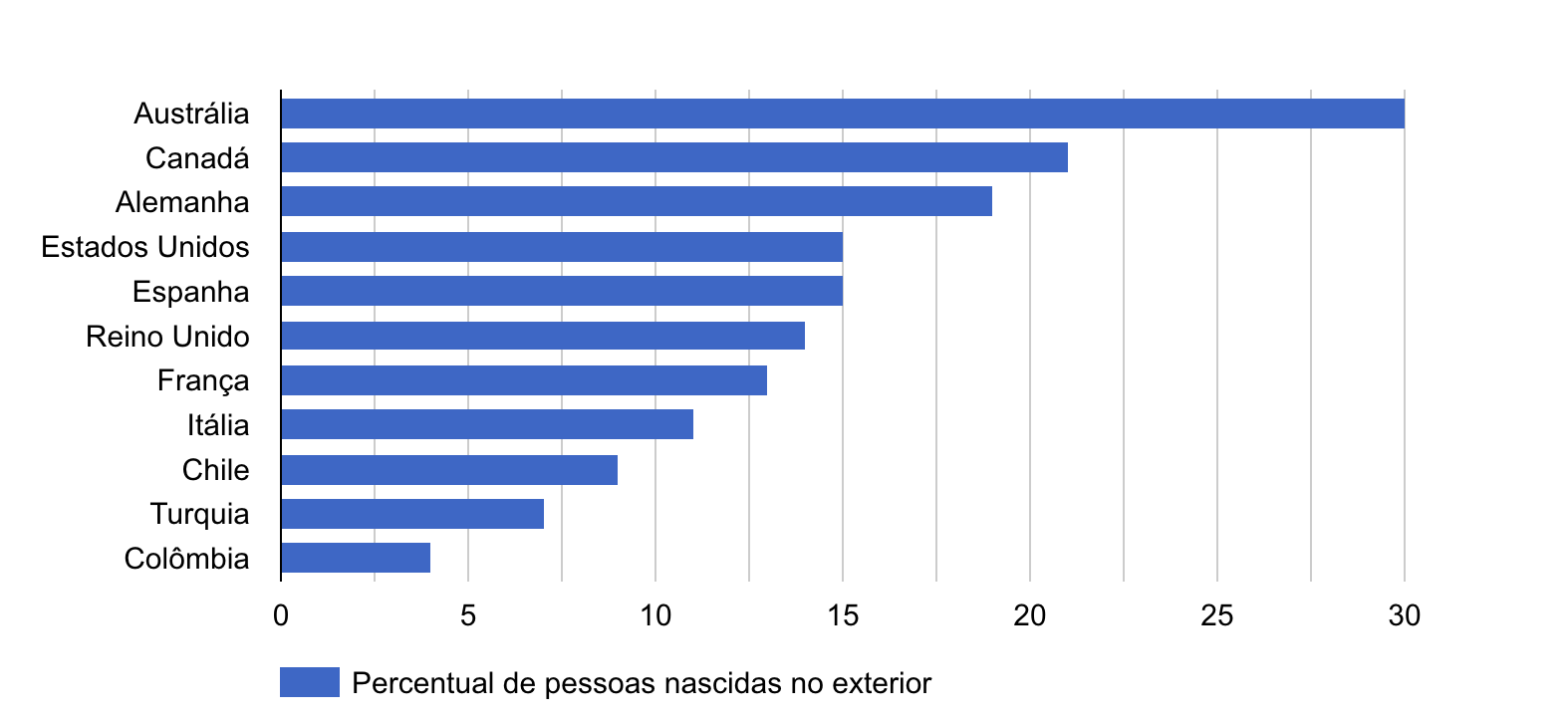
However, immigrants still face challenges in catching up to native-born Canadians in certain economic indicators, although the disparities have narrowed over time and across generations.
Many struggle to find jobs that match their skills and qualifications. Daniel Hiebert, a professor at the University of British Columbia who has advised Canadian authorities on immigration issues, notes: “Immigrants have to make an extraordinary effort to find their place in the Canadian economy, especially those who have limited language skills.”
Read also: “Francization in Quebec: 7 truths no one tells you about this program”
What are the programs intended for temporary foreign workers in Canada?
Canada has several temporary programs intended for foreign workers to meet specific sector demands and promote the country’s economic and cultural development.
In 2022, a total of 604,382 new temporary work permits were granted to foreigners, covering agricultural workers, home caregivers, and highly skilled professionals. In 2024, the government announced that for the first time it will start limiting the number of temporary foreign workers accepted into the country.
Read also: “Canada immigration will limit the population of temporary residents over the next three years”
The system is multifaceted, but temporary workers generally enter Canada through two main pathways.
- Via the International Mobility Program, which offers work visas to foreigners who meet broad criteria. In this case, employers can hire them without considering Canadian candidates, although some permit holders may have restrictions on where and what type of work they can perform.
- Via the Temporary Foreign Worker Program, which allows companies that cannot find local labor to recruit internationally. All foreign workers enjoy labor protections, and authorities inspect their workplaces to mitigate potential abuses.
However, the temporary worker system in Canada faces issues of abuse and corruption, facilitated by a lack of adequate government oversight and work permits that tie immigrants to a single employer, problems that intensified during the COVID-19 pandemic.
The length of stay for foreign workers in Canada varies. While some skilled temporary workers eventually obtain permanent residency, those with low wages generally do not have this opportunity.
Read also: “What changes for you with permanent residency in Canada”
What are the biggest challenges of illegal immigration in Canada?
Undoubtedly, one of the main challenges lies in Canada’s geography. The country is vast and surrounded by three oceans - the Atlantic, the Arctic, and the Pacific - all to the north. Furthermore, its neighbor, the United States, is known as a traditional route for illegal immigration.
This also presents major challenges due to extensive collaboration with the Canadian government, which receives information about undocumented individuals in the United States attempting to cross the border in search of new opportunities.
Its highly regulated immigration system, which includes some of the strictest visitor visa requirements in the world, was designed to further reduce this phenomenon.
Although estimates vary, academic sources suggest that between three hundred thousand and six hundred thousand undocumented people reside in Canada. In line with its ambitious immigration targets, the government announced in 2023 a plan to offer certain undocumented workers a pathway to citizenship.
A 2023 survey by Canadian research firm Leger revealed that more than half of the Canadian respondents considered the government’s target of five hundred thousand immigrants a year to be too high.
Furthermore, 75% expressed concern that an increase in immigration would result in excessive demand for housing and social services. However, several Canadian cities have sanctuary policies and have adopted “access without fear” policies, which restrict police cooperation with immigration authorities and guarantee access to public services for undocumented people.
Authorities also rarely enforce the law prohibiting Canadian companies from hiring undocumented workers.
How have United States policies affected Canada’s immigration system?
The United States and Canada have a long history of collaborating to control the movement of people and goods across their extensive shared border, the longest in the world at over five thousand miles.
In 2011, the governments announced a strategy called “Beyond the Border” to improve security cooperation and promote lawful travel and trade. Under this plan, the two countries began sharing information about visa applicants and border crossers.
More broadly, this bilateral framework fostered a healthy working relationship between Canada and the United States, which some analysts believe will continue in the coming years. Theresa Brown, an immigration expert at the Bipartisan Policy Center, notes that “the Beyond the Border agreement and all the subsequent actions institutionalized a level of Canada-U.S. border cooperation that is deep enough… to survive changes in political leadership in both countries.”
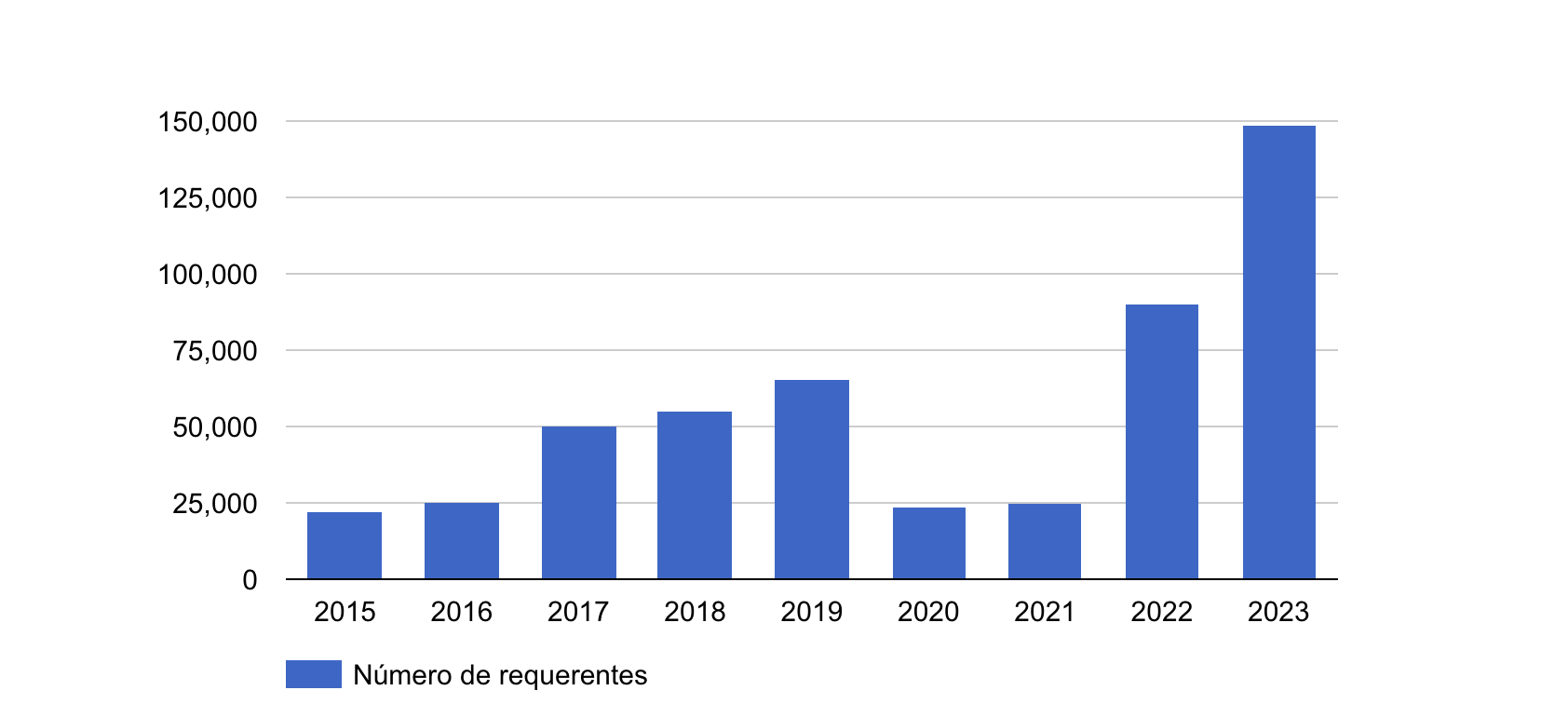
The immigration actions of the Trump administration put pressure on Canada’s system. In 2017, when Trump took office, Canada received about fifty thousand asylum requests, double the previous year.
Experts linked this to various Trump policies, including asylum and travel restrictions, increased immigration enforcement, and the decision not to renew Temporary Protected Status (TPS) for Haitians.
This surge overwhelmed Canadian authorities, leading them to tighten border security, modify the asylum screening process, and even visit the United States to deter potential migrants.
However, migration pressures continued. In 2020, a Canadian court ruled that a 2002 U.S.-Canada agreement, also known as the “safe third country” agreement, which manages asylum seekers at the border, was unconstitutional. Human rights organizations also argued that it endangered asylum seekers. Despite this, the decision was overturned in April 2021, and the agreement remains in place.
Asylum requests continue to rise following the pandemic drop
Total asylum seekers processed by Canada (Data for 2023 is preliminary) - Source: IRCC
However, some of the immigration policies implemented during Trump’s tenure ended up being advantageous to Canada’s economy. For example, in June 2020, his administration suspended the issuance of visas for highly skilled workers. Meanwhile, Canada made it easier for foreign workers to acquire jobs within its territory, granting work permits to skilled professionals - many of whom were applying to the United States - within two weeks.
This led some U.S. companies to expand their presence in Canada. In light of Canada’s success in managing migration flows, Trump proposed a merit-based plan modeled on Canada’s points-based system, where highly skilled migrants would receive preference, although this plan did not advance in Congress.
President Biden’s immigration policies have been varied. He reversed many of Trump’s actions, such as the green card freeze enacted in late 2020. Furthermore, his administration reinstated TPS for Haitians and extended benefits to several other countries, including Afghanistan and Ukraine.
Biden also increased the annual refugee admission cap to 125,000 for fiscal years 2022, 2023, and 2024. However, Biden also modified the “safe third country” agreement between the two nations, making it easier for border authorities to turn away asylum seekers, and imposed stricter requirements on crossings at the U.S. southern border, proposing new asylum restrictions.
References used in this article.
- Canada’s Private Sponsorship Model Represents a Complementary Pathway for Refugee Resettlement
- They came to Canada for their dreams. Instead they found a mental health nightmare
- Canada Tests the Limits of Its Liberal Immigration Strategy
- Canada’s immigration system isn’t living up to its potential. Here’s how to fix it
- Canada’s Immigration System Increasingly Draws Talent from the United States
With that, I will conclude here. Don’t forget to subscribe to our newsletter to receive weekly updates on how to prepare for this journey we affectionately call immigration.
See you in the next post! 😀

Marco Vasconcelos
Brazilian, webmaster, and e-commerce specialist living in Montreal since 2018. Founder of Você no Quebec, sharing practical guides, housing tips, and real-life experiences in the province to help Brazilian and international newcomers transition smoothly.
Read more about Marco →