
How to write an Invitation Letter for someone visiting you in Canada
| Updated August 2026. The template and the logic of an invitation letter have not changed — it is a supporting document, not something set by legislation. Two practical reminders for 2026: the visitor visa (TRV) fee is $185 CAD per person ($100 application + $85 biometrics), and anyone who has held a Canadian visa in the past 10 years or holds a valid US visa can travel on an eTA for $7 CAD, provided they arrive by air. In that second case an invitation letter is rarely necessary. |
What is a Canadian Invitation Letter and what is its purpose?
An invitation letter for visiting Canada is a formal document written by a Canadian resident (either a permanent resident, temporary permit holder, or citizen) inviting a friend or family member to visit them in Canada.
This letter serves as a supporting document in the visitor visa application process.
Here are some key points about this letter:
- It is not mandatory, but it can make the visa approval process easier by clearly demonstrating the purpose of the trip.
- It must include key information: full name, date of birth, address, and phone number of the visitor, relationship to the host, purpose and duration of the trip, lodging arrangements, and how expenses will be paid.
- The tone should be polite and formal, using clear expressions like “I intend to,” “we plan to,” or “I would like to invite.”
- The letter does not make the host legally responsible for the visitor’s actions or expenses (unless explicitly stated as a sponsor), but rather verifies the credibility of the visit.
- It does not guarantee visa approval, which remains at the discretion of the visa officer.
The official IRCC invitation letter guidelines provide additional context on requirements.
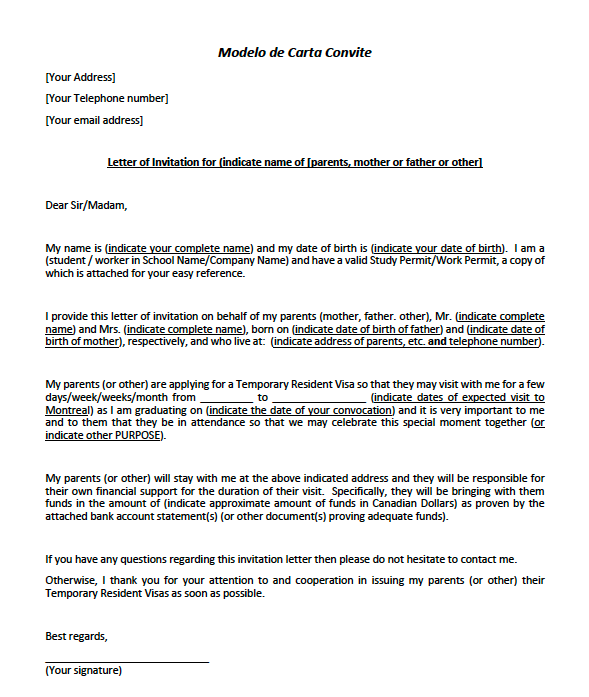
Invitation Letter Template
Here is the step-by-step process to write your own invitation letter.
Read also: “10 Frequently Asked Questions by Visitors to Canada”
1. Contact Information
Start the letter with the host’s complete contact details at the top: full legal name, physical address, phone number, and email. Ensure this matches your Canadian identity documents, as immigration officers may contact you to verify.
2. Greeting and Formal Tone
Address the visa officer formally. You can begin with “To the Visa Officer” or “Dear Immigration Officer.” Use respectful, concise language throughout the document.
3. Introduction
State the purpose of the letter in the first paragraph. For example: “I am writing this letter to support the visitor visa application of my parents, who wish to visit me in Canada.”
Keep it concise and focus on the primary intent. If you and your spouse or partner are hosting, include details for both hosts and sign jointly.
4. Visitor Details (The Guest)
Provide detailed information about the guest:
- Full legal name (as it appears in their passport).
- Date of birth.
- Nationality and passport number.
- Relationship to the host.
To make the application easier to review, attach a combined PDF document containing the invitation letter followed by scans of the guest’s passport bio page and proof of relationship (like birth certificates if inviting parents). You can use free tools like ILovePDF.com to merge files.
5. Travel Details
State the estimated arrival and departure dates, along with the duration of the visit.
It is wise for applicants to wait for visa approval before purchasing airline tickets. Immigration officers are fully aware of this, so providing estimated travel dates in the letter is perfectly acceptable.
Read also: “8 things you must do on an exploratory trip to Canada before immigrating”
 Golden Tip! Golden Tip!In both your invitation letter and explanation letter, it is often recommended to limit the declared visit duration to 30 days or less, even if the guest plans to stay longer. Visa officers scrutinize long-term tourist requests (like 3 or 6 months) heavily because they require much higher financial support and raise concerns about the guest's intention to return home. Once approved, the visa automatically allows entry for up to 6 months. This strategy is frequently used by immigration consultants in Canada. |
6. Financial Support and Lodging
Clearly explain where the guest will stay and who is paying for the trip:
- If the visitor is self-funded: State that the guest has personal savings and will cover their own flights and expenses, while you provide lodging at your home.
- If you are sponsoring the visitor: State that you will cover all costs, including round-trip flights, meals, local transport, and emergency travel medical insurance. If sponsoring, attach your own Canadian financial documents (bank statements, T4 slips, or employment letters).
7. Closing and Signatures
Conclude by expressing your excitement for the visit and state clearly that your guest will return to their home country at the end of their stay. Sign the letter by hand or with a digital signature.
Download an Invitation Letter Template
To simplify editing, you can download a standard editable Word document (Docx) template containing both English and Portuguese layouts.
Download Invitation Letter Template
This template is set up for inviting parents with the host providing lodging. You can adapt it to fit your specific visitor situation.
Frequently Asked Questions
What immigration status do I need to invite someone?
Any legal resident of Canada can write an invitation letter. This includes Canadian citizens, Permanent Residents (PR), international students, and temporary workers on active permits. You must simply provide proof of your status (PR card, study/work permit, or citizenship certificate) as an attachment to the letter.
What document format should I use?
The letter should be saved and submitted in PDF format to ensure it remains clean, readable, and cannot be modified.
Which language should I write the letter in?
The letter must be written in one of Canada’s official languages: English or French. If you are applying from a country like Brazil, writing a Portuguese version is not necessary for the visa office, but you can include one if desired. It is best to stick to English or French to ensure easy review by all global visa offices.
Writing a clear, well-supported invitation letter is a great way to help your loved ones join you in Canada. To receive weekly immigration tips, subscribe to our newsletter.
See you in the next post! 😉

Marco Vasconcelos
Brazilian, webmaster, and e-commerce specialist living in Montreal since 2018. Founder of Você no Quebec, sharing practical guides, housing tips, and real-life experiences in the province to help Brazilian and international newcomers transition smoothly.
Read more about Marco →