How to get your driver's license in Quebec: Complete Guide
How to get a driver’s license in Quebec?
Quebec operates on a multi-stage graduated licensing system. This helps reduce the risks that new drivers may face, especially during severe weather conditions. To hold a full driver’s license, drivers in Quebec are required to take a Class 5 driving course, as well as pass a theoretical knowledge test and a practical road test. This system is designed to provide novice drivers with plenty of hands-on experience before driving independently with few or no restrictions.
A curious fact about Class 5—the equivalent of Category B in Brazil for passenger vehicles—is that it allows you to drive trailers or even small moving trucks. A good example of this is that you can rent and drive a U-Haul moving truck in Quebec using your Brazilian driver’s license (as long as it is within the authorized validity period).
Driver’s licenses are issued by the Société de l’assurance automobile du Québec (SAAQ). Applicants must be 16 years of age or older. Applicants under 18 must have the consent of a parent or guardian. As another interesting detail about abbreviations, the sale of alcoholic beverages (excluding beer and wine) in the province of Quebec is controlled by a state monopoly called SAQ, so puns and jokes between these two very different organizations are frequent.
Read also: “How to buy a new or used car in Canada in 10 steps”
To make it easier to understand, I will break this guide down to explain the process for those who already have a driver’s license from their home country and those starting from scratch. First, let’s address some common questions.
Is the process for getting a driver’s license the same in all Canadian provinces?
Unlike other countries, Canada does not have a single national highway code or department of motor vehicles. In Canada, each province has its own traffic laws, license classes, and regulatory bodies. Consequently, rules vary slightly from province to province, although a driver’s license issued in Quebec is valid nationwide.
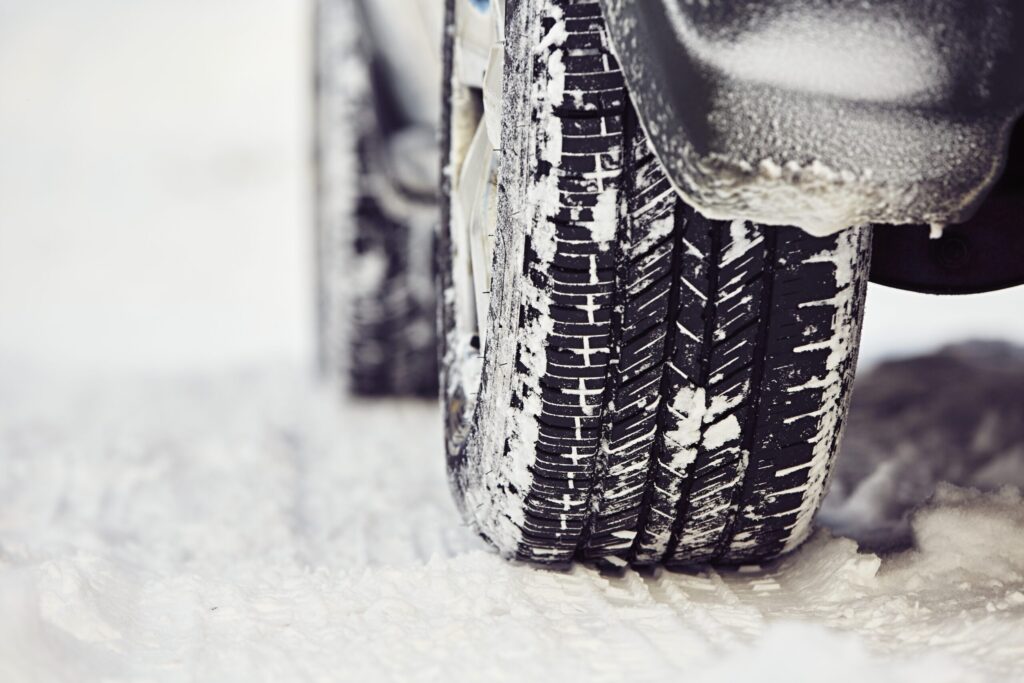
Winter tires for Quebec - Source: Stock image
A good example of this provincial autonomy is that Quebec is one of the only provinces in Canada where drivers are legally required to install winter tires (specifically certified for snow and ice) from December 1 to March 15. That means we have the additional cost of maintaining two sets of tires for our cars here.
And before you ask, no, we do not use chains or metal studs on our wheels. Winter tires use a rubber compound and tread design that offers much higher traction on snow and ice than all-season tires, which are used in the rest of Canada. They should only be used in cold temperatures, as they wear out very quickly in warm weather and increase fuel consumption.
Does my home country’s driver’s license work in Quebec?
Yes, but temporarily. It will be valid for a set period until you can obtain a local license, based on the following criteria:
- Work Permit (or Tourist/Permanent Resident): Valid for up to 6 months starting from your date of arrival or entry.
- Study Permit: Valid for the entire duration of your study permit. This means that if you come to take a 3-year course in Quebec, you don’t have to worry about starting the exchange process immediately, allowing you to adapt to the language and local traffic rules first.
 Driving in Canada with a foreign license! Driving in Canada with a foreign license!If you want to drive using your home country's license in the province of Quebec, you must obtain an official translation (into English or French) of your document. You can get this translation done by a certified translator in Quebec (such as an OTTIAQ member) or through your country's consulate in Montreal. For Brazilians, the process can be requested online at this link. |
| Bonus Tip! As an alternative to translating your national license, you can apply for an International Driving Permit (IDP) in your home country before moving. With an IDP, you can drive in Canada without any translation hassles during the allowed period. Just make sure to carry both your national license and the IDP together. |
Will my driver’s license serve as identification in Canada?
More than just a driving permit, along with your health card (RAMQ), it is the most important everyday identification document for living in Canada. It serves as proof of address and makes it much easier to resolve administrative or commercial business. You can use your passport for many things, but you truly feel settled once you hold a provincial driver’s license.
Read also: “How to apply for your health card in Quebec (RAMQ)“
Can I buy a car in Quebec using only my foreign driver’s license?
Yes, but keep in mind that you will not be able to finance it, even if you already have some credit history. Banks and insurance companies are closely tied in Canada. If you are not licensed in the country, you will face high insurance risks, which will prevent loan approvals even if you have years of driving experience back home.
For used cars bought in cash, this restriction does not apply. However, car insurance in your first few years in Canada will be expensive, especially if you opt for comprehensive coverage.
Now that we have covered these key questions, let’s look at the exchange process.
Exchanging your license based on previous driving experience
If you have previous driving experience and a valid license from your home country, you fall into one of two categories:
- You are moving from a country that has a reciprocal exchange agreement with Quebec.
- You are moving from a country that does not have a reciprocal agreement with Quebec (which is the case for Brazil and most other countries).
1. Moving from a country with a reciprocal agreement
- Eligible countries: Austria, Belgium, France, Germany, Isle of Man, Japan, Netherlands (including Sint Maarten, Aruba, Bonaire, Curaçao, Saba, and Sint Eustatius), South Korea, Switzerland, Taiwan, United Kingdom (England, Wales, Scotland, and Northern Ireland), and the United States.
- Process: Simply exchange your existing license at an SAAQ service outlet.
- Requirements: At least two years of driving experience, proof of legal status in Canada, and proof of residence in Quebec.
- Steps: Schedule an appointment at an SAAQ service outlet and bring:
- Proof of legal status in Canada (Work/Study Permit or PR Card) and proof of residency in Quebec.
- Your valid foreign driver’s license and proof that you resided in that country for the past three years.
- A certified translation of your license if it is not in French or English.
- Payment of the licensing fee. In 2026, renewing a Class 5 licence with no demerit points costs roughly $50.23 CAD — a figure that still includes a temporary 75% discount on the SAAQ insurance contribution. Without that discount the full rate would be above $120.
If you have less than two years of experience from a reciprocal country, you will receive a probationary license and must gain the remaining experience before upgrading to a full Class 5 license.
2. Moving from a country without a reciprocal agreement (e.g., Brazil)
If you move from a country without an exchange agreement, you can still fast-track the process. You must hold a valid foreign license equivalent to a Class 5 passenger vehicle license for at least one year. You will skip the mandatory driving course but must pass the SAAQ written and road tests.
- Steps:
- Prepare for the written knowledge test by studying the official SAAQ manuals: Driver’s Hand-book and Driving a Passenger Vehicle. You can also practice using online SAAQ quizzes.
- Call the SAAQ to schedule an initial document review appointment.
- Bring proof of legal status in Canada, proof of Quebec residence, your valid foreign driver’s license, and its certified translation.
- At this appointment, the SAAQ will verify your documents and allow you to book your written test (or take it immediately if slots are available).
- Pay the applicable fee (opening a file with the SAAQ runs about $12.40 CAD in 2026).
- Once you pass the written test, schedule and take your practical road test ($30 CAD).
- After passing the road test, you will receive your full Class 5 driver’s license. The annual fee is prorated based on your birth date, so you only pay the full amount the following year.
Retaking tests and available languages
If you fail either test, you must wait at least 28 days to retake it and pay the testing fees again.
The written test cannot be taken in Portuguese. It is offered in French, English, Spanish, Mandarin, Arabic, and Punjabi. In the computerized written test, you can switch between French and English in real-time if you need to clarify a term.
| Important Tip! During the written test, take your time. Read each question carefully and analyze the traffic scenario drawings—many of them have tricky details. If you can, book your road test at an SAAQ center outside of major cities (in a smaller town). The traffic is much quieter, and the examiners are often more relaxed and patient. I failed my first written test because I rushed, but passed the road test on the first try in a smaller municipality. |
What to expect on the road test
The examiners want to see that you make a clear physical motion of looking both ways at a complete stop at a stop sign (Arrêt), especially at four-way stops. They also assess your speed control, attention to blind spots, and courtesy on the road.
Understanding right-of-way rules at intersections is crucial. Parallel parking is generally easier than in other countries, as parking spaces are quite large.
Confusing signage - Source: Stock image
Pay close attention to road signs in Montreal; they can be very confusing, especially in construction zones. Taking your road test in a quieter suburban or rural SAAQ location is highly recommended.
Driving culture in Quebec
Despite the strict testing, you will notice that drivers in Quebec have their own habits. They like speed, honk frequently, and can be impatient with mistakes. However, they generally respect traffic rules, maintain lane discipline, follow queues without cutting in, and always yield to pedestrians and cyclists.
Because Quebec has a diverse population of immigrants, you will encounter various driving styles. Staying defensive and alert is key, especially in major cities like Montreal.
Using your own car or renting for the road test
You can use your own car for the road test if your foreign license is still valid and you have valid insurance. The examiner will inspect your vehicle’s lights, wipers, horn, windshield, and tires before the test starts. If any component is defective, the test will be cancelled.
If you don’t have a car, you can rent a test car from a private service at the SAAQ center by booking in advance at this link for a fee of $43.49 CAD + taxes.
Getting a Quebec driver’s license from scratch (No previous license)
If you do not hold a license and are starting from scratch, you must be at least 16 years old to apply (and have parental consent if under 18).
- Steps:
- Enroll in a mandatory Class 5 driving course at an AQTr-recognized driving school.
- Complete Phase 1 of the driving course (4 theoretical modules).
- Pass the knowledge test administered by the driving school.
- Visit an SAAQ service outlet to apply for your Learner’s License, valid for 18 months. In 2026 it costs around $77.10 CAD, insurance contribution included.
- Pass a vision test and fill out a medical declaration.
- You must hold your Learner’s License for at least 10 months before you can take the written test.
- Complete the remaining phases of the driving course (24 hours of theory and 15 hours of on-road practice).
- Pass the SAAQ written knowledge test after 10 months.
- Pass the SAAQ road test after holding your Learner’s License for at least 12 months and completing the driving course.
- Receive your Probationary License, valid for 2 years. Counting every step, expect a total of roughly $243.56 CAD to reach this point in 2026 — check the current table on the SAAQ site, since exam fees are billed separately and change often.
- After holding a probationary license for 2 years with a clean record, you will receive your full Class 5 license.
Learner’s License restrictions
- You must always drive with a qualified driving instructor or an accompanying driver who has held a valid Class 5 license for at least two years.
- Zero alcohol and zero drugs in your system.
- No driving between midnight and 5:00 AM.
- Limit of 4 demerit points.
Probationary License restrictions
- Limit of 4 demerit points.
- Zero alcohol and zero drugs.
- Passenger limits for young drivers between midnight and 5:00 AM.
SAAQ Fee Structure (Class 5)
| Item | Cost in 2026 |
|---|---|
| Opening a file with the SAAQ | approx. $12.40 CAD |
| Learner’s License (18 months) | approx. $77.10 CAD |
| Annual renewal — Class 5, no demerit points | approx. $50.23 CAD |
| Estimated total up to the probationary licence | approx. $243.56 CAD |
Important: these figures were reviewed in August 2026. Knowledge and road test fees are charged separately and change often, so check the official table before booking: SAAQ rates.
One observation that directly affects your wallet: since 2022 the SAAQ had been granting a “payment holiday” on the insurance contribution, which made renewals unusually cheap (down to roughly $26 in 2025). As of January 1, 2026 that waiver dropped from 100% to 75%, which is why the amount nearly doubled. It is still well below the $121 you would pay with no discount at all — but don’t count on it lasting. It is temporary by design.
Source: SAAQ driver’s licence costs (fees are subject to annual adjustments).
Key road rules in Quebec
Familiarizing yourself with the Quebec Highway Safety Code is essential before driving:
- Road signs and highway information are in French, not English (except in some West Island neighborhoods in Montreal). A highway is called an “Autoroute”.
- Seatbelts are mandatory for all passengers.
- Radar detectors are strictly illegal.
- Speed limits are in km/h. Default limits are 30 km/h in school zones, 50 km/h in urban areas, 90 km/h on rural roads, and 100 km/h on major highways.
- The minimum passing distance between a car and a cyclist is 1 to 1.5 meters depending on the speed limit.
- Turning right on a red light is legal throughout Quebec except on the Island of Montreal and where prohibited by specific signs. You must make a complete stop first and yield to pedestrians and oncoming traffic.
- At four-way stop signs, vehicles proceed in the order they arrived (first-come, first-served).
- You must stop in both directions for a school bus with its red lights flashing or stop sign extended. The only exception is when a physical median barrier separates your lane from the bus.
- Always yield to pedestrians at marked crossings.
- Move over or slow down for emergency vehicles, tow trucks, and road service vehicles stopped on the roadside with flashing lights (Move Over Law).
- Handheld phone use while driving is strictly prohibited and carries heavy fines and demerit points.
- The legal blood alcohol concentration (BAC) limit is 0.05% for experienced drivers, and zero for learners and probationary drivers.
- Keeping right except to pass is strictly enforced on multi-lane highways in Quebec.
| Important Tip! Winter driving is a major challenge in Quebec. If you are not used to snow and ice, driving in a snowstorm can be stressful. Consider booking a few hours with a professional instructor for a winter driving lesson. They can teach you skid recovery, braking techniques on ice, and how to maintain control. |
For more information, you can check the Canada Safety Council winter driving tips.
Holding a valid Quebec driver’s license will give you the freedom to commute, explore the province, and stay warm during those freezing -20°C winter days.
Have a safe trip and see you in the next post! ;)

Marco Vasconcelos
Brazilian, webmaster, and e-commerce specialist living in Montreal since 2018. Founder of Você no Quebec, sharing practical guides, housing tips, and real-life experiences in the province to help Brazilian and international newcomers transition smoothly.
Read more about Marco →